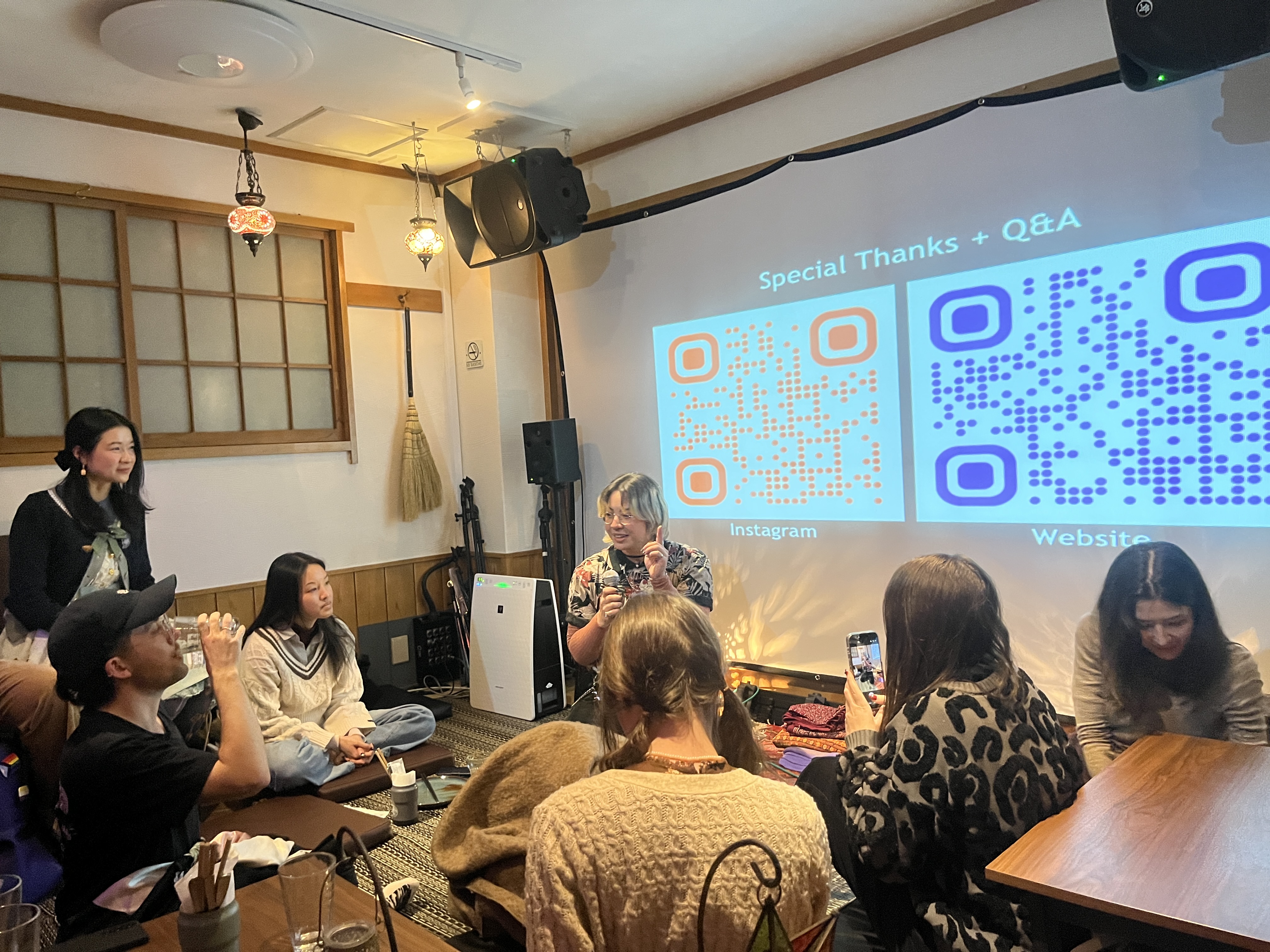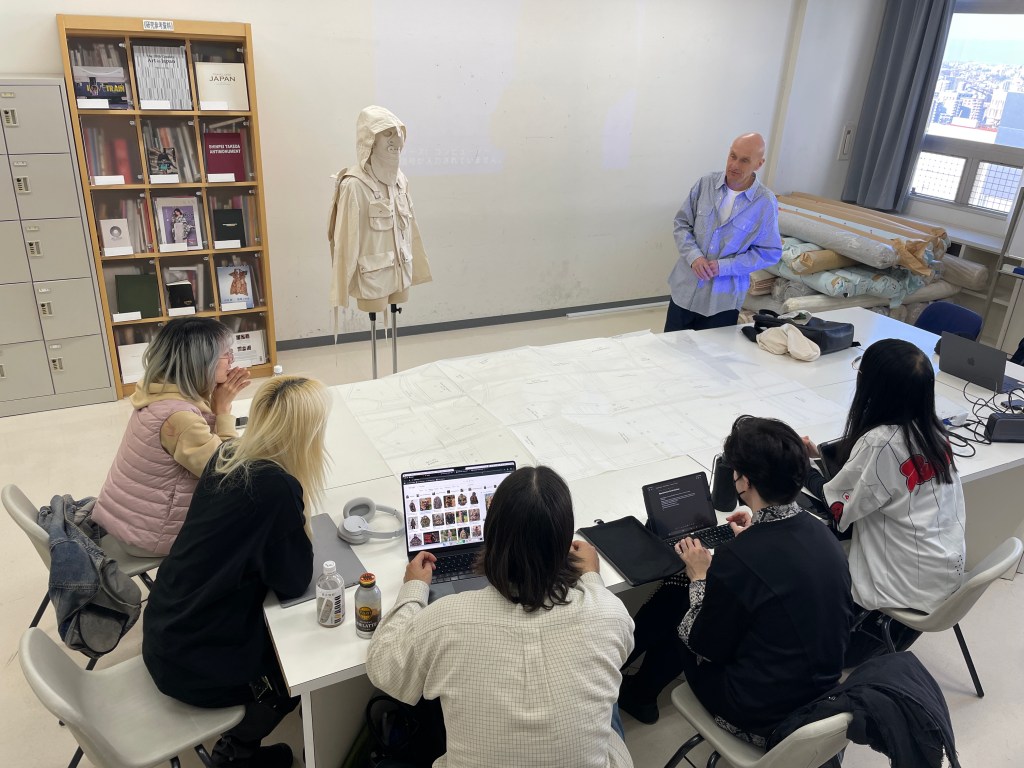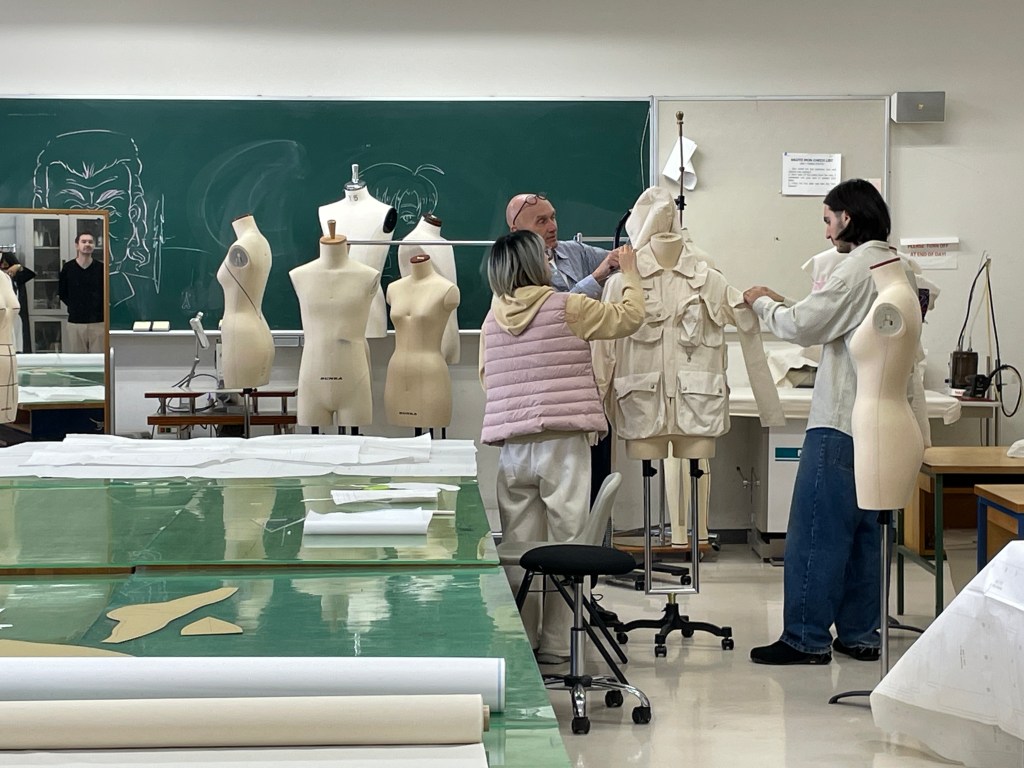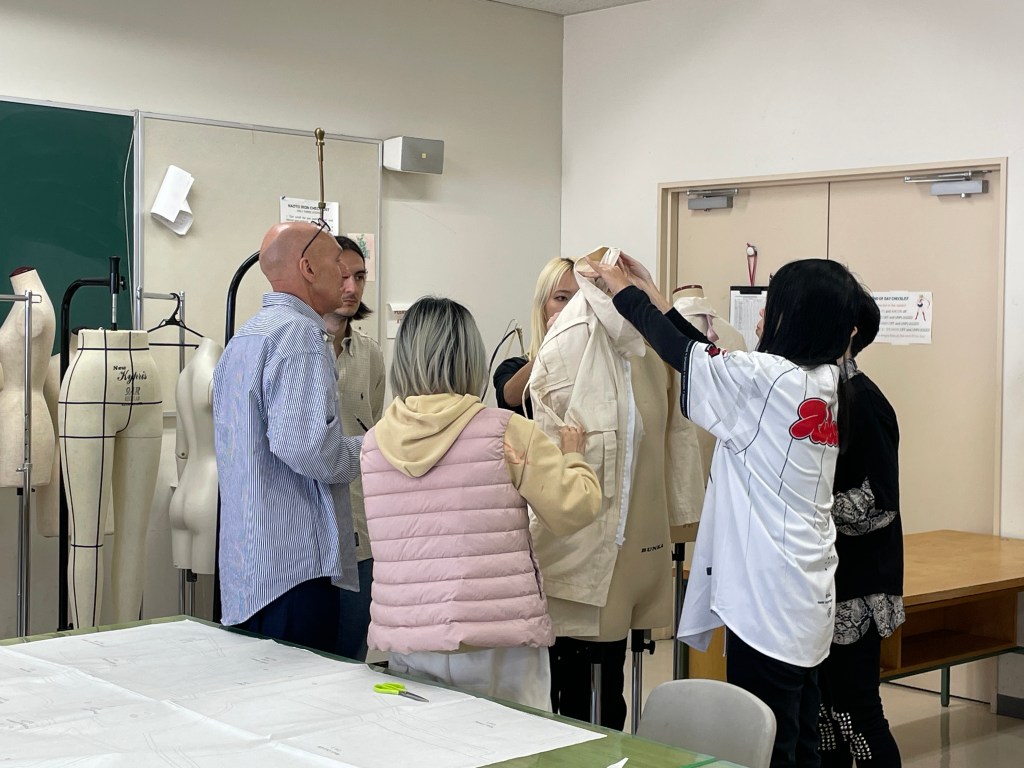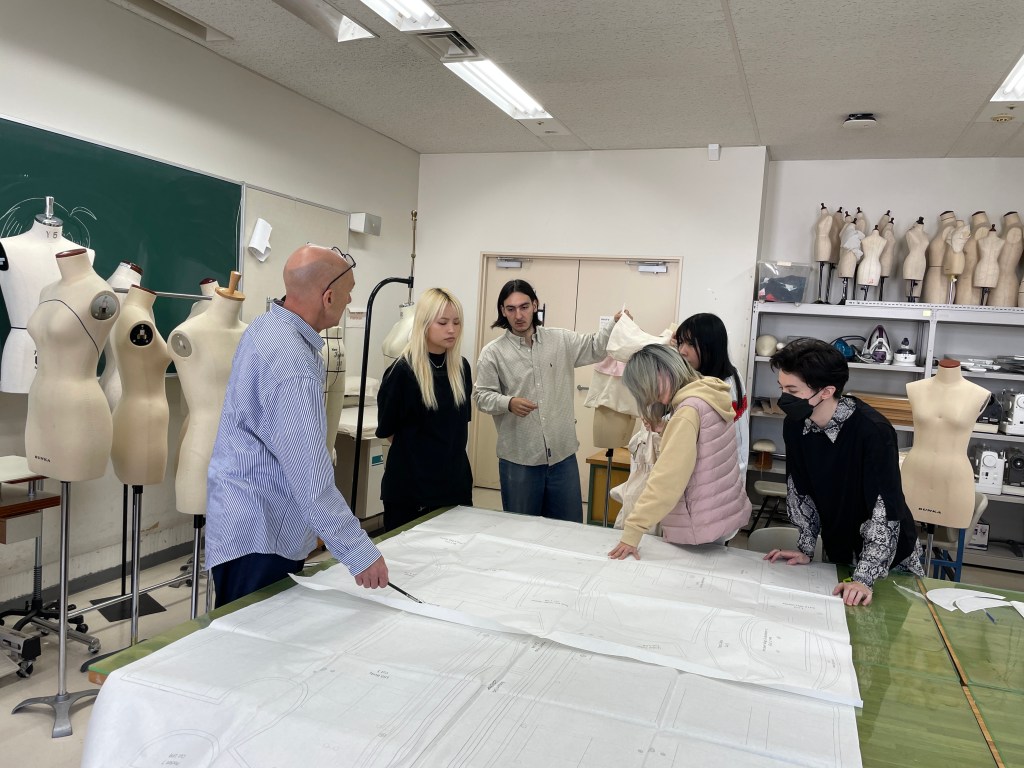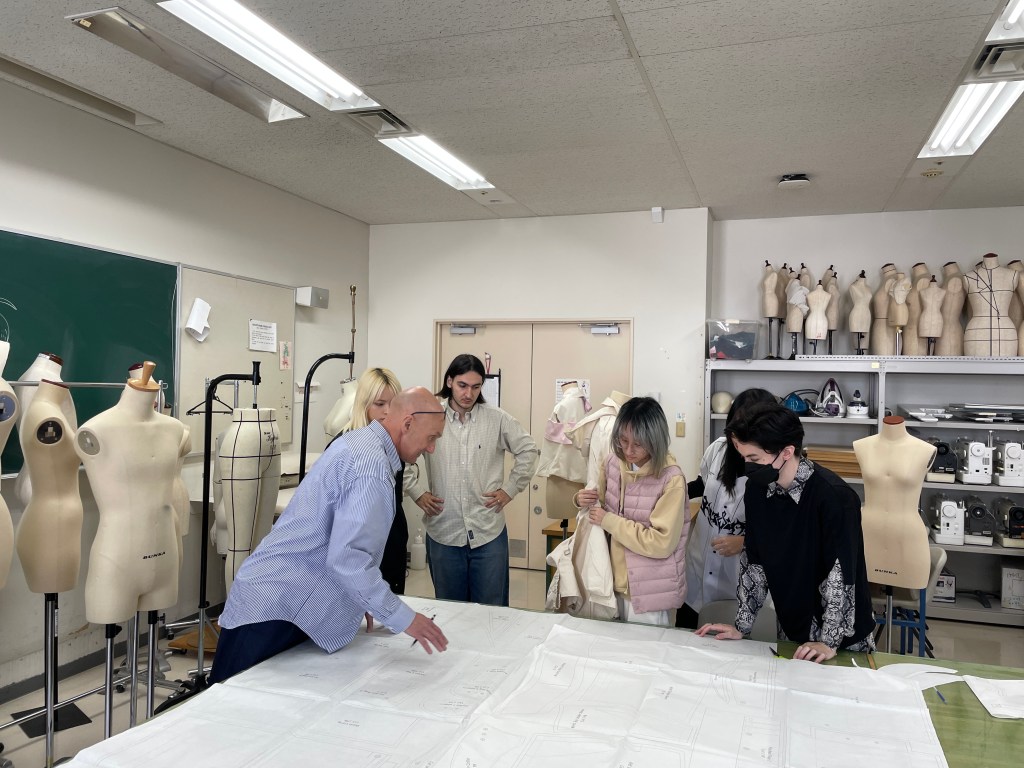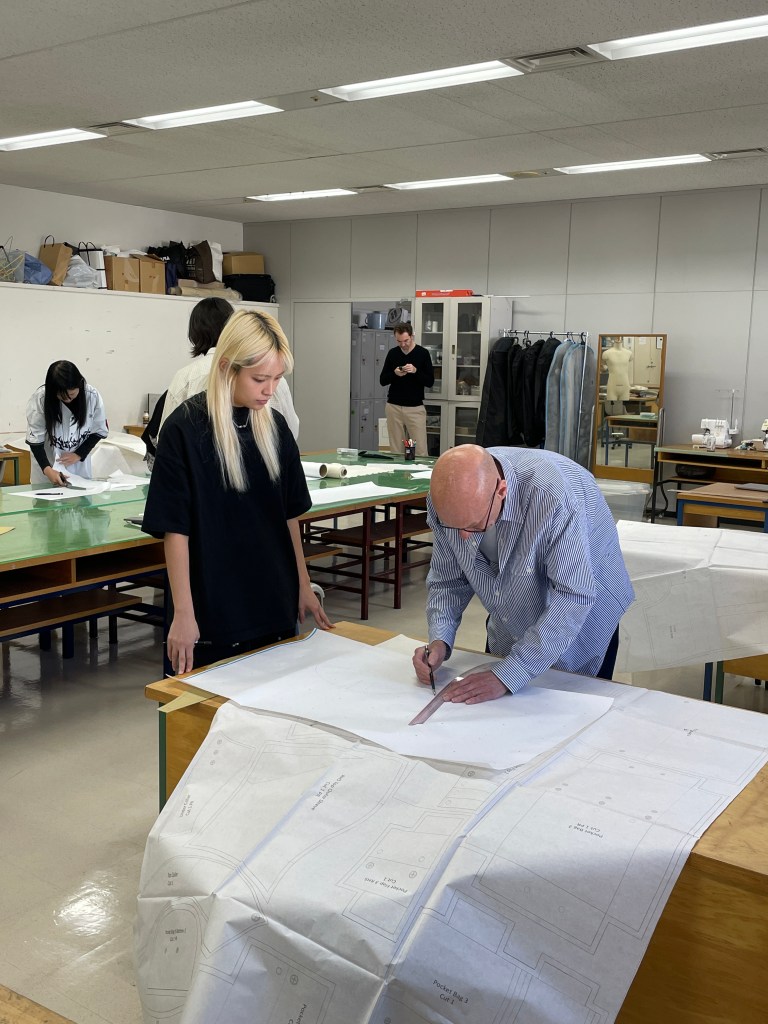
Professor Gareth Kershaw from RMIT University held a special workshop on object-base research

We had the pleasure of welcoming Professor Gareth Kershaw from RMIT University, who delivered a special lecture and hands-on workshop for GFC students on object-based research into occupational and functional garments, using men’s technical archetypes as a pedagogical tool.

In his talk, Professor Kershaw emphasized the growing importance of revisiting and reinterpreting occupational clothing in contemporary design—both to enhance functionality and to elevate aesthetic value.

Drawing on examples ranging from Andrew Bolton’s concept of “Supermodern” clothing to the innovative work of Massimo Osti of C.P. Company, he explained how exploring diverse design methodologies and historical approaches can broaden our perspectives as fashion designers.

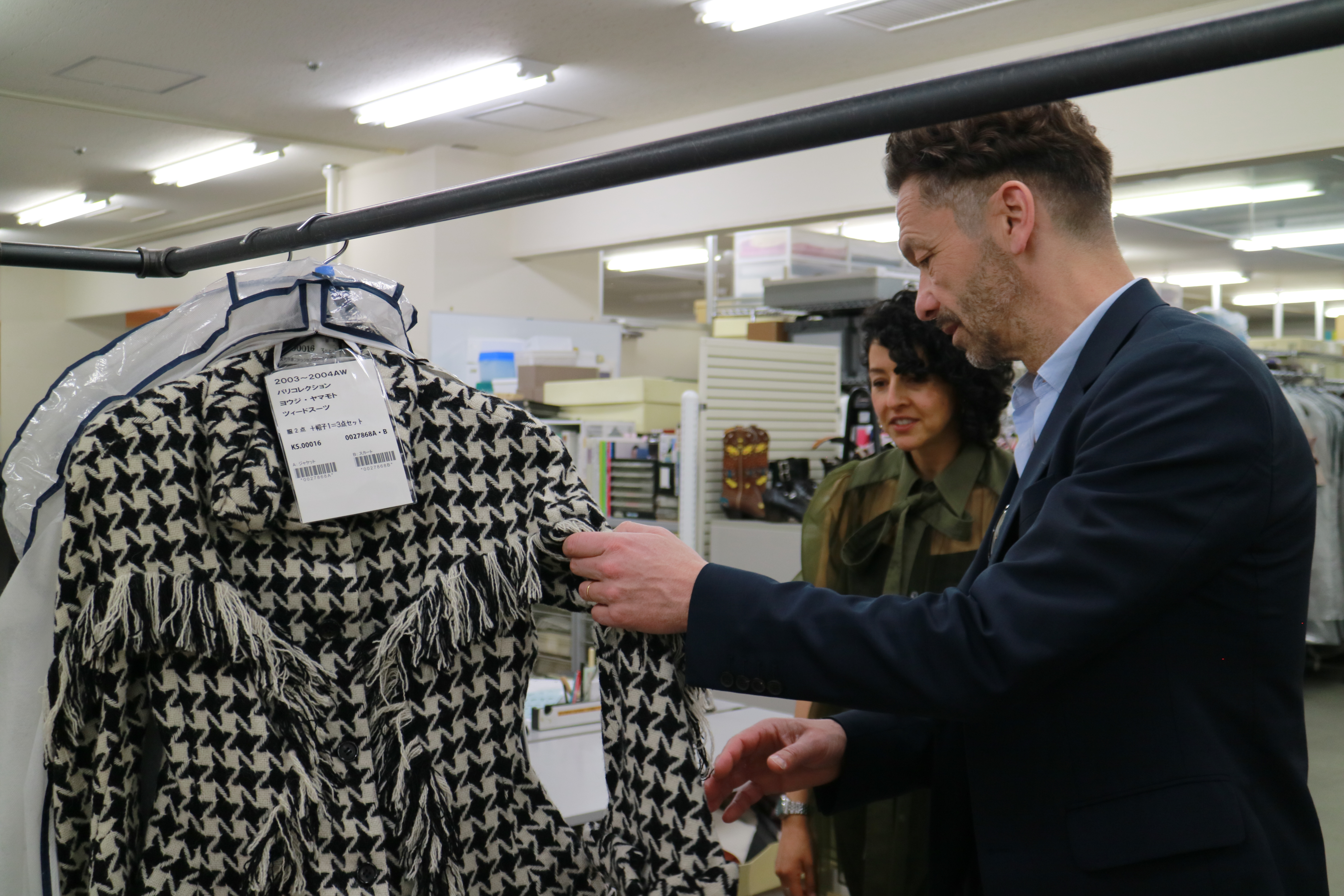
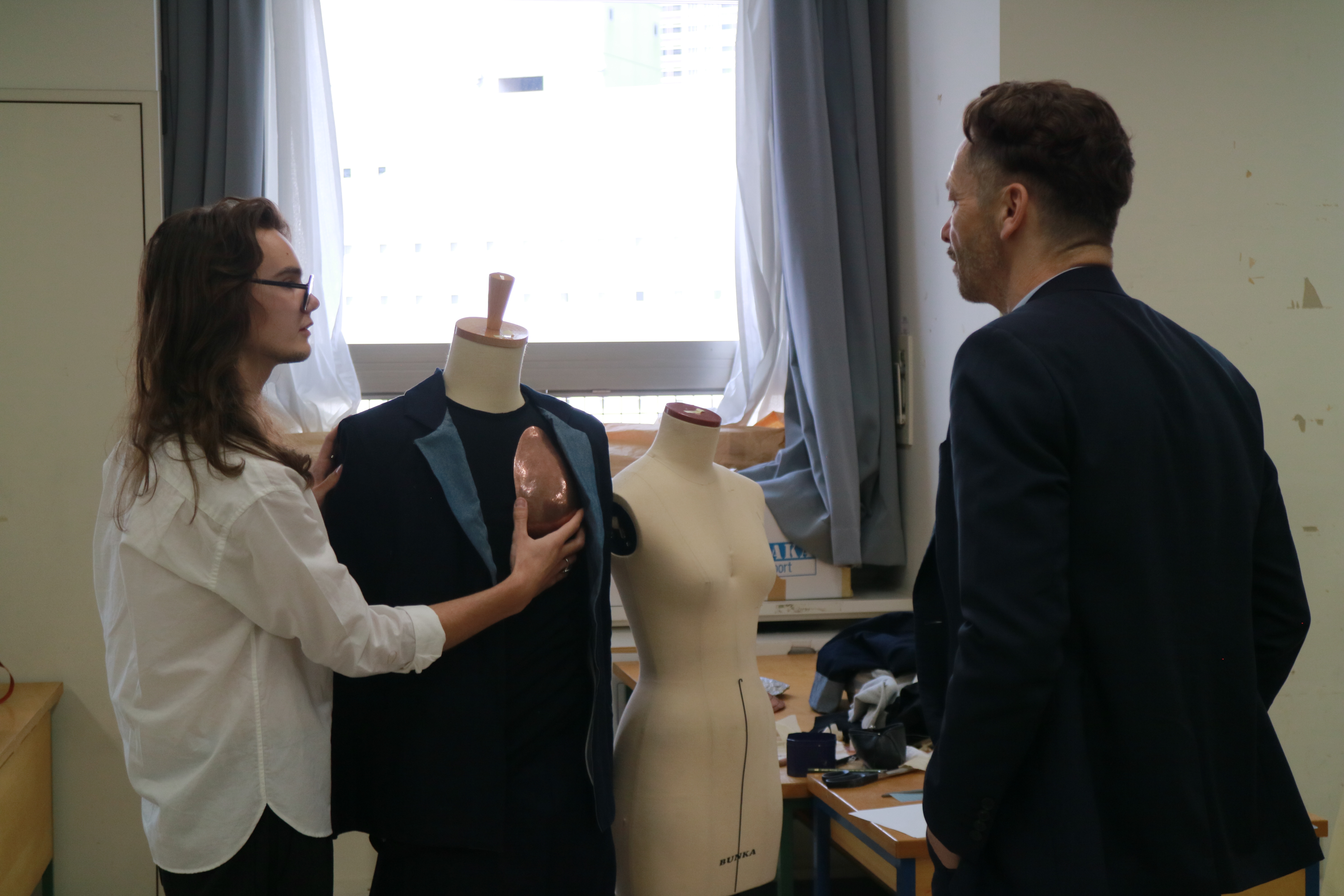
During the workshop, students engaged in archive-based research—an approach Professor Kershaw has developed extensively over the years—and worked directly with the pattern of the Swiss Army M70 Alpenflage Jacket, gaining insight into the construction and logic behind technical garments.

GFC Students Visit Nakajima Konja: A Living Legacy of Indigo Dyeing

Located in Hanyū City, Saitama Prefecture, Nakajima Konja is a historic indigo dyeing factory with nearly two centuries of tradition. Established in 1837, the factory has been run by successive generations of master dyers, preserving and passing down the intricate art of Japanese indigo dyeing.

The current master, Daigo-sensei, began his training at a young age under Yasuo Nakajima, the previous head of the workshop and a highly respected artisan designated as a Saitama Prefecture Intangible Cultural Asset by Japan’s Agency for Cultural Affairs. Through years of dedicated apprenticeship, Daigo-sensei has inherited not only the techniques but also the deep cultural knowledge and philosophy behind this time-honored craft.

The yarns dyed at Nakajima Konja are prized for their quality and used in the production of various textiles, including dogi (uniforms worn in martial arts such as Kendo), handwoven stoles, and other finely crafted garments produced in nearby weaving communities.

Understanding the importance of sustaining this cultural heritage, Daigo-sensei actively shares his expertise by offering hands-on workshops. This week, students from the GFC program had the rare opportunity to explore the factory and participate in a special lecture and demonstration. They learned about traditional shibori (tie-dye) techniques, experimenting with fabric manipulation before immersing it into the rich, natural indigo vats—an unforgettable experience that brought them closer to Japan’s artisanal textile traditions.

Special thanks to Ōta Shigeru from the Textile Department, who kindly introduced us to Nakajima Konja and accompanied us during our visit.

EnsAD Rector Emmanuel Tibloux visit to Bunka

GFC shares a double degree program with EnsAD (L’École nationale supérieure des Arts Décoratifs), one of France’s top design universities.

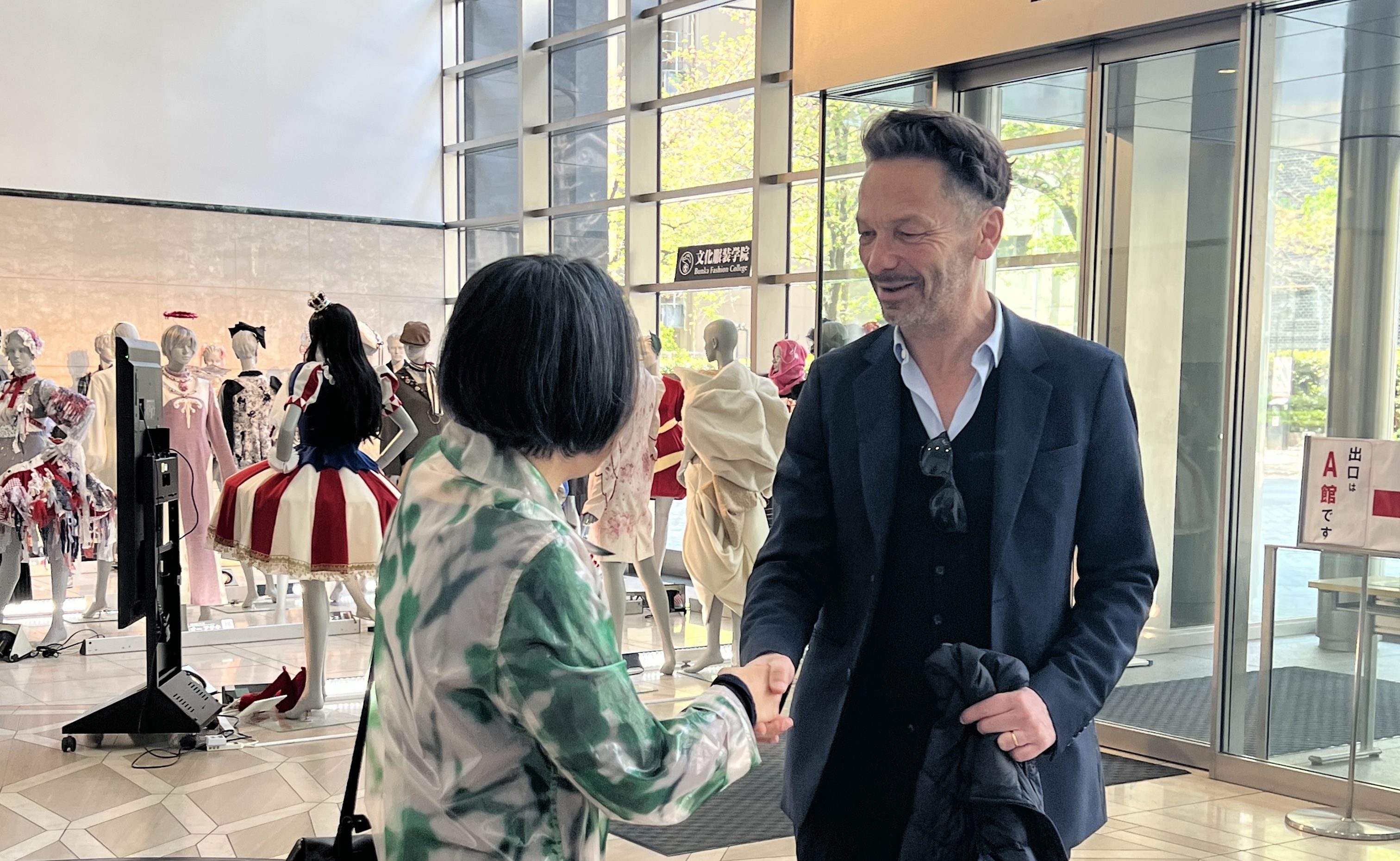
On April 17th, 2025, EnsAD Rector Emmanuel Tibloux visited Bunka Gakuen University.
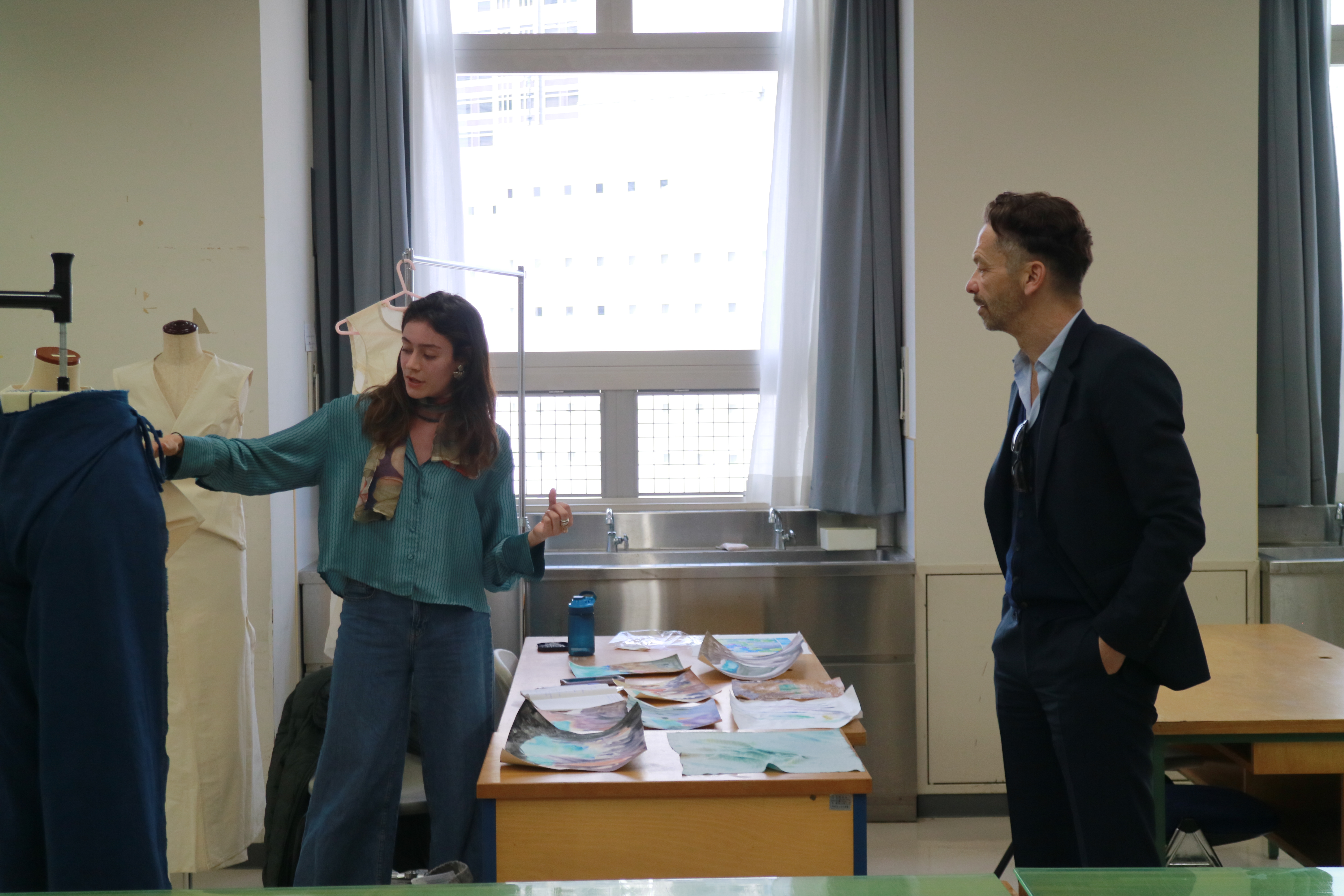
During his visit, he engaged in a lively discussion with students from the double degree program, speaking with them as they presented their works in progress. He also toured several key facilities that represent the university’s strengths, including the Textiles, Clothing and Video Resource Centre, the university library, and the renowned Clothing Museum—cornerstones of Bunka Gakuen’s proud heritage in fashion and design education.

Visit by Bunka-ENSAD double degree alumna Laure Julien

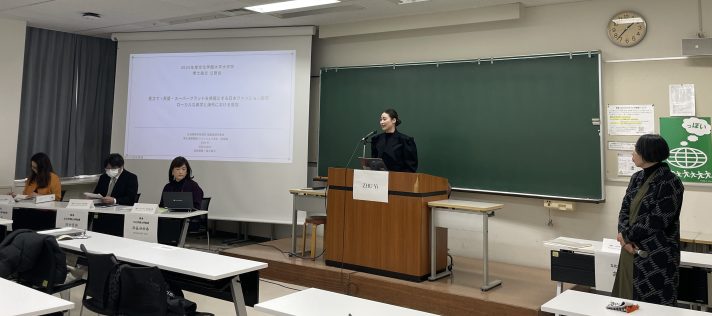
On January 7th, Laure Julien, who did her double degree at our GFC course in 2020, visited the university to talk about her multiple professional experiences as an independent artist after her time at our course.

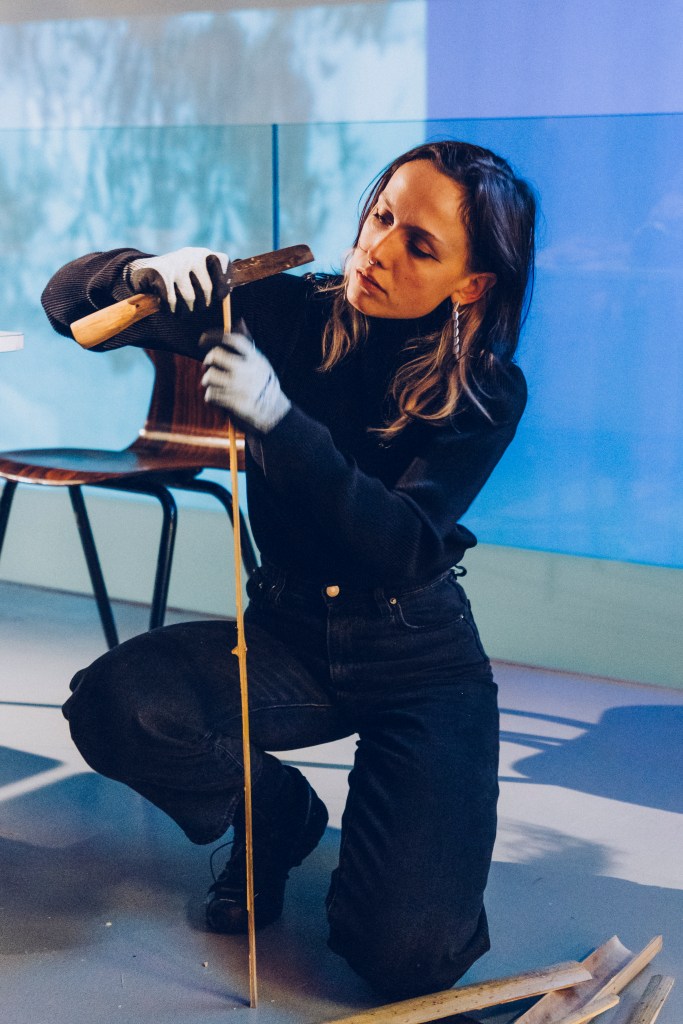
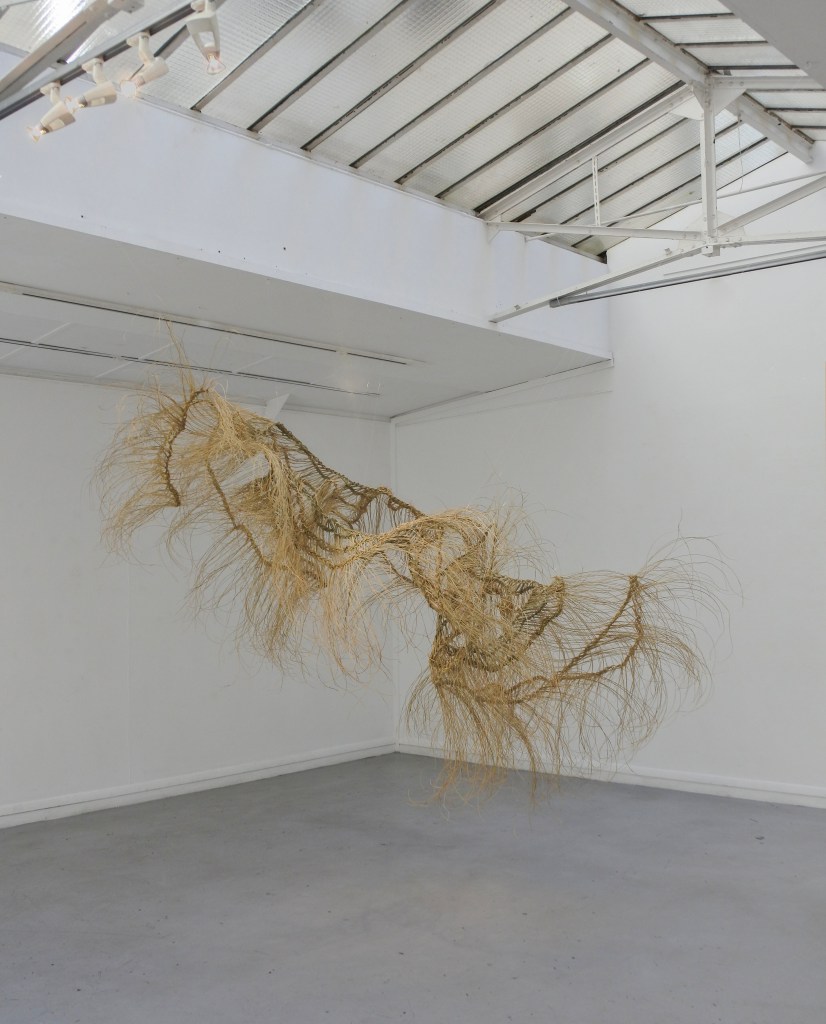
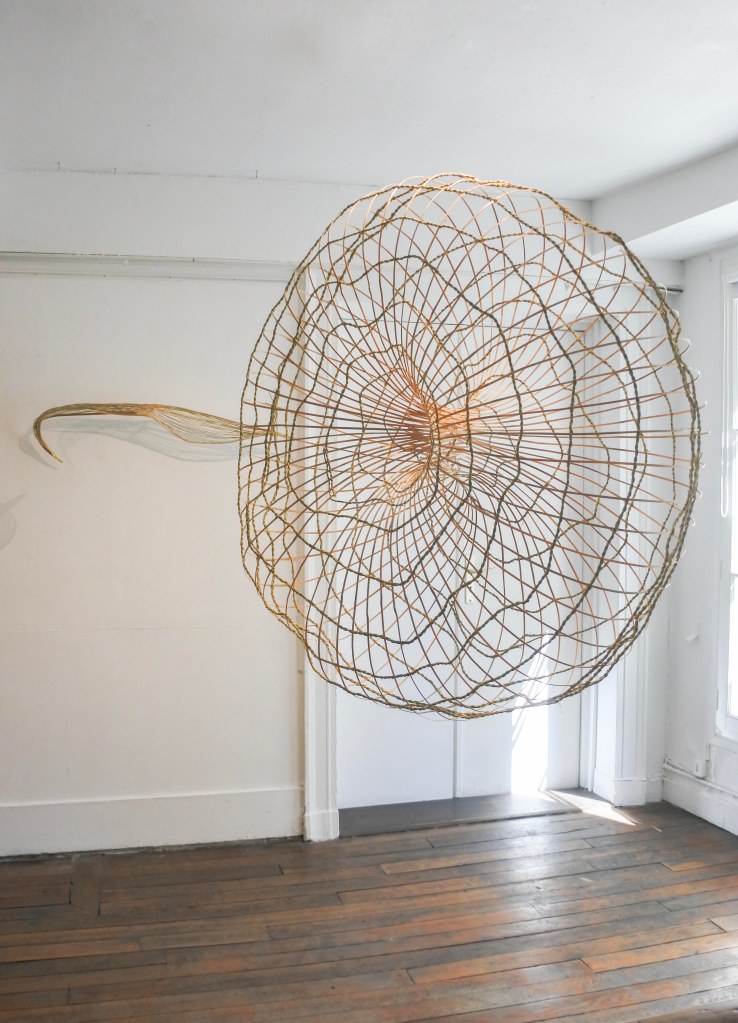
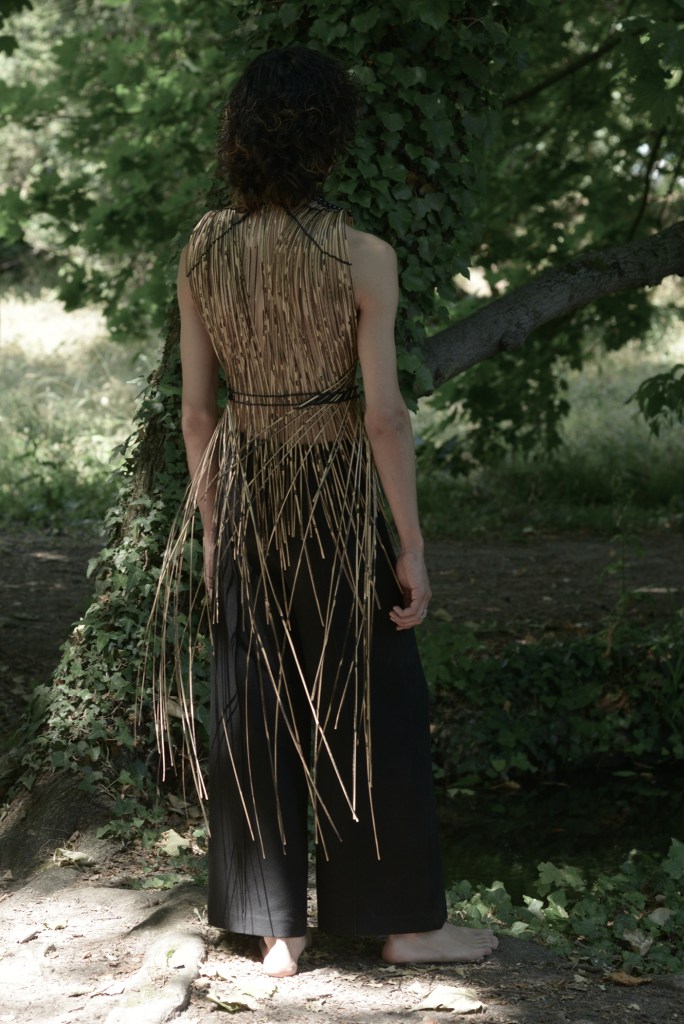
During her exchange at GFC, Laure decided to extend her time in Japan for one year, to intern with the brand Eatable of many orders (Atami, Japan), between 2021 and 2022, and apprentice with bamboo master Tanaka Kyokusho in 2022. While in Atami, she also participated in an artist-in-residence program that allowed her to develop and present a performance project with a butoh dancer dressed in silk and bamboo, inspired by the princess Kaguya. After her time in Japan, she returned to Paris to finish her education at ENSAD, where she developed a graduate collection of sculptures in bamboo and leather in 2023.

After graduation, she has been active as an independent artist, and participated in a residence project at Casa de Velázquez, Madrid, Spain, to study esparto weaving in 2024, and continued studying palm, bull rush, and soft rush weaving in Portugal during the same year. While participating in these apprenticeships and residence programs, she organised and participated in multiple exhibitions featuring her works in France, Spain, and Japan.

She returned to Japan in January of this year with a cultural activity visa, to participate in two artist-in-residence programs: a MIRA artist in residence program in Beppu, Kyushu, where she will be working with bamboo artist Takayuki Shimizu; and a residency at YUI-PORT in Niigata.

Her experiences provided a valuable inspiration for our current students, and showed that even with limited Japanese language skills, it is possible to participate in internships, apprenticeships and artist-in-residency programs in Japan! We wish Laure all the best of luck in her upcoming endeavors!

Visit by Mr. Kubo Tadashi (Yohji Yamamoto)

On April 24th, Mr. Kubo Tadashi, who is in charge of the creative department at Yohji Yamamoto, visited GFC for a lecture. He discussed concepts of cultural appropriation, and his experiences and thoughts concerning the referencing of ethnic dress in the development of one’s own collection and expressions.
Our GFC students also had the opportunity to present their portfolio and to receive some feedback on their works, a valuable experience!

Mr. Kubo has been visiting our GFC program yearly since 2015, and some of our students have been able to conduct long-term internships at the Yohji Yamamoto studio. We hope that this tradition may continue into the future!