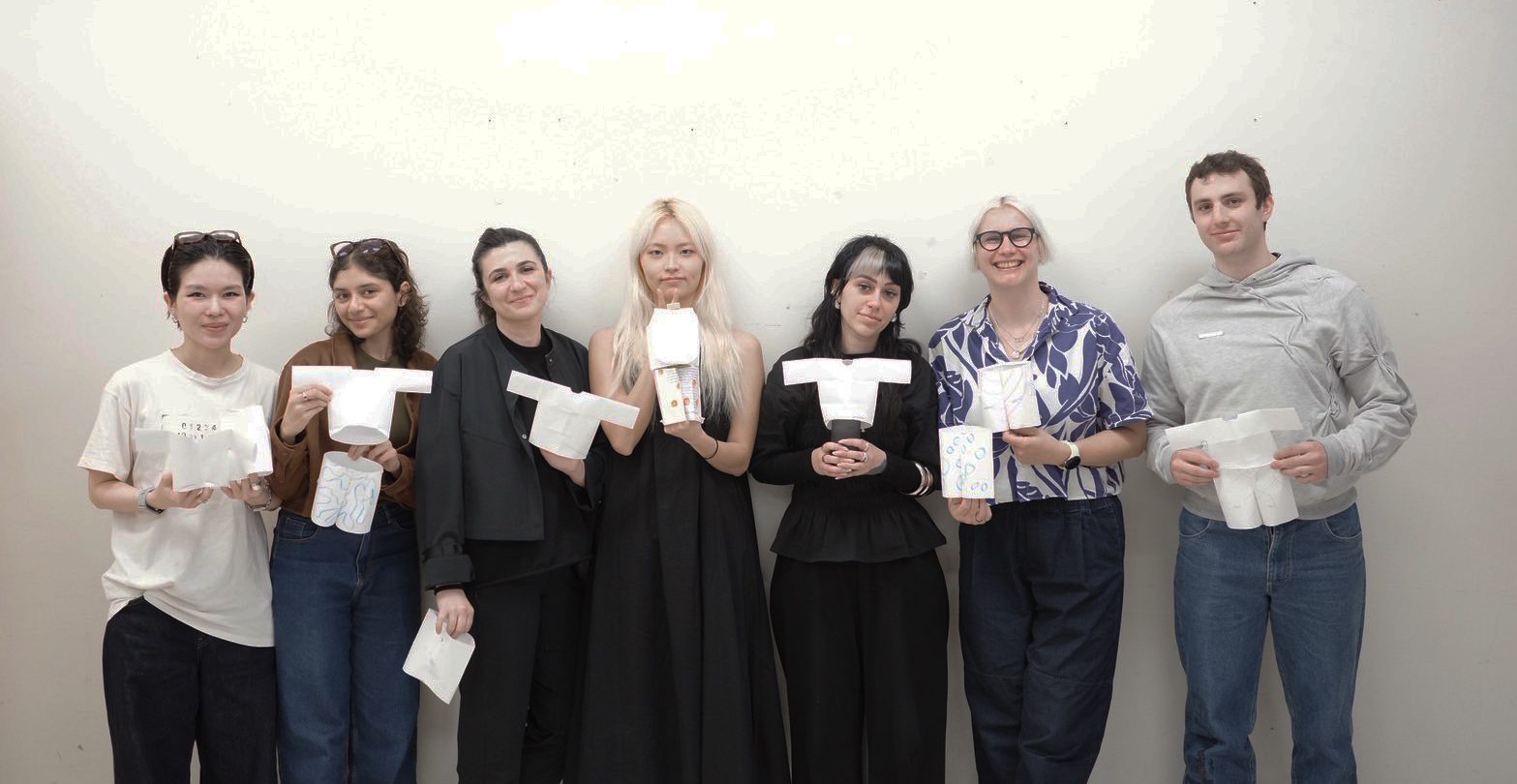
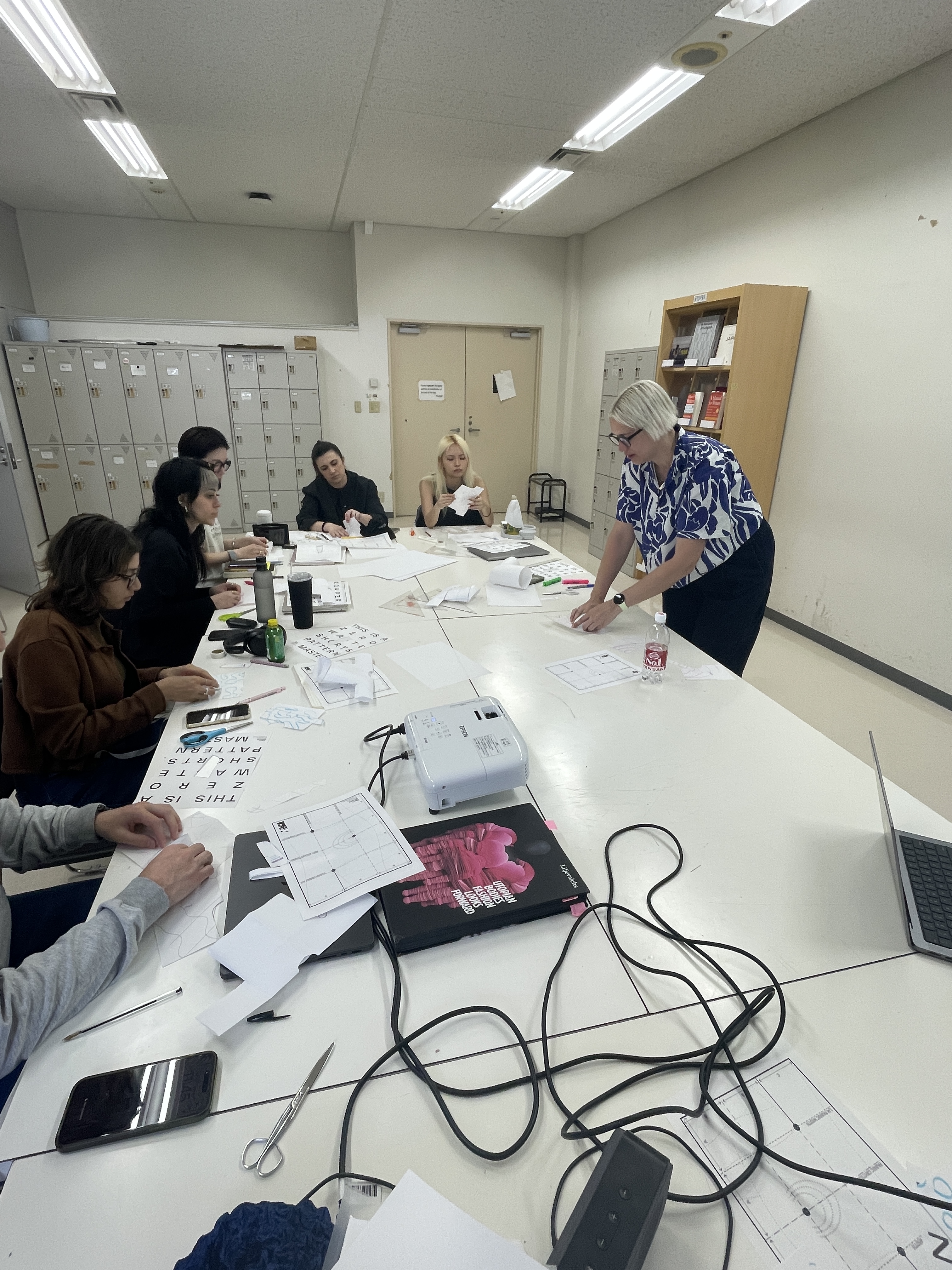
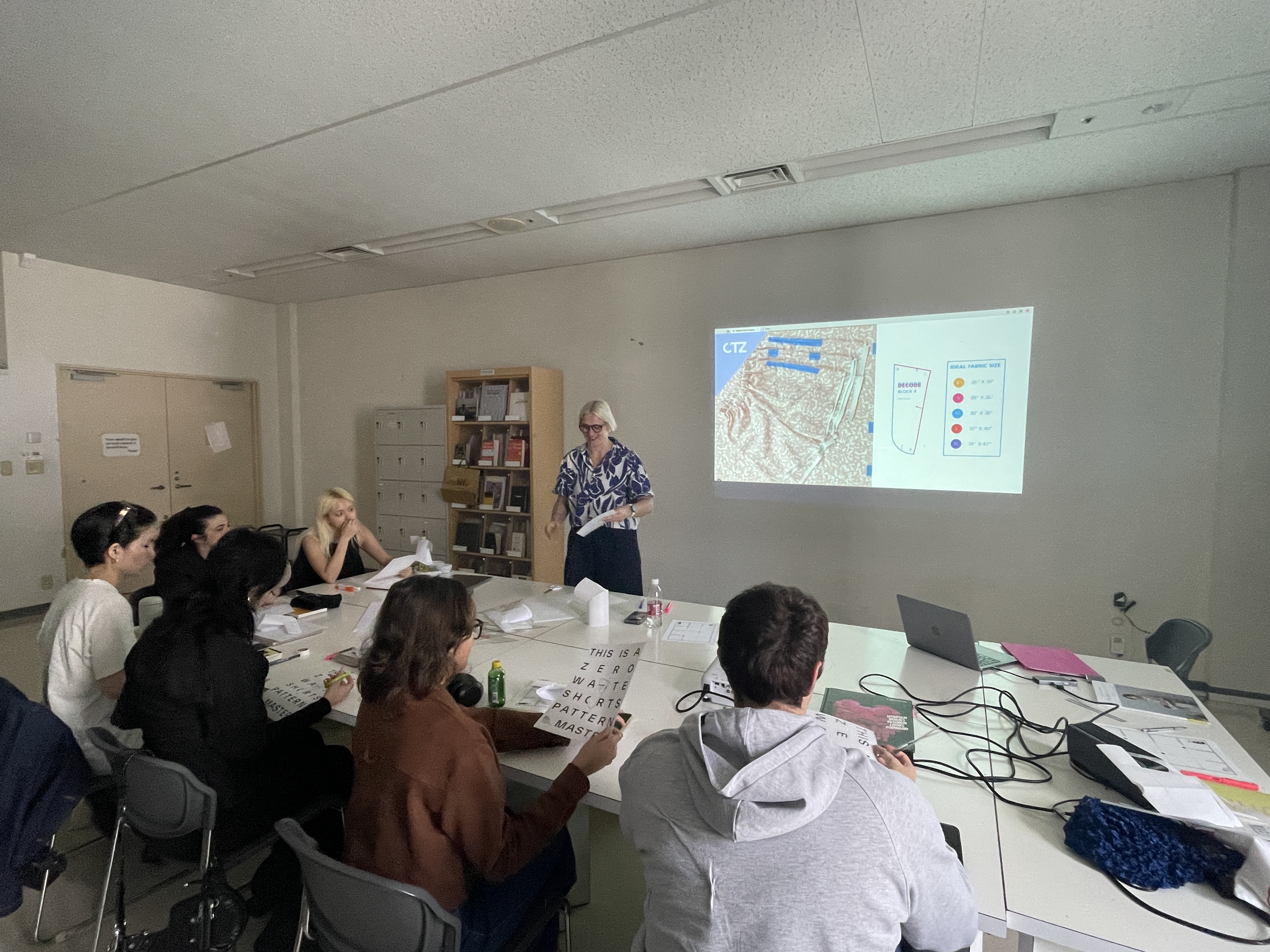
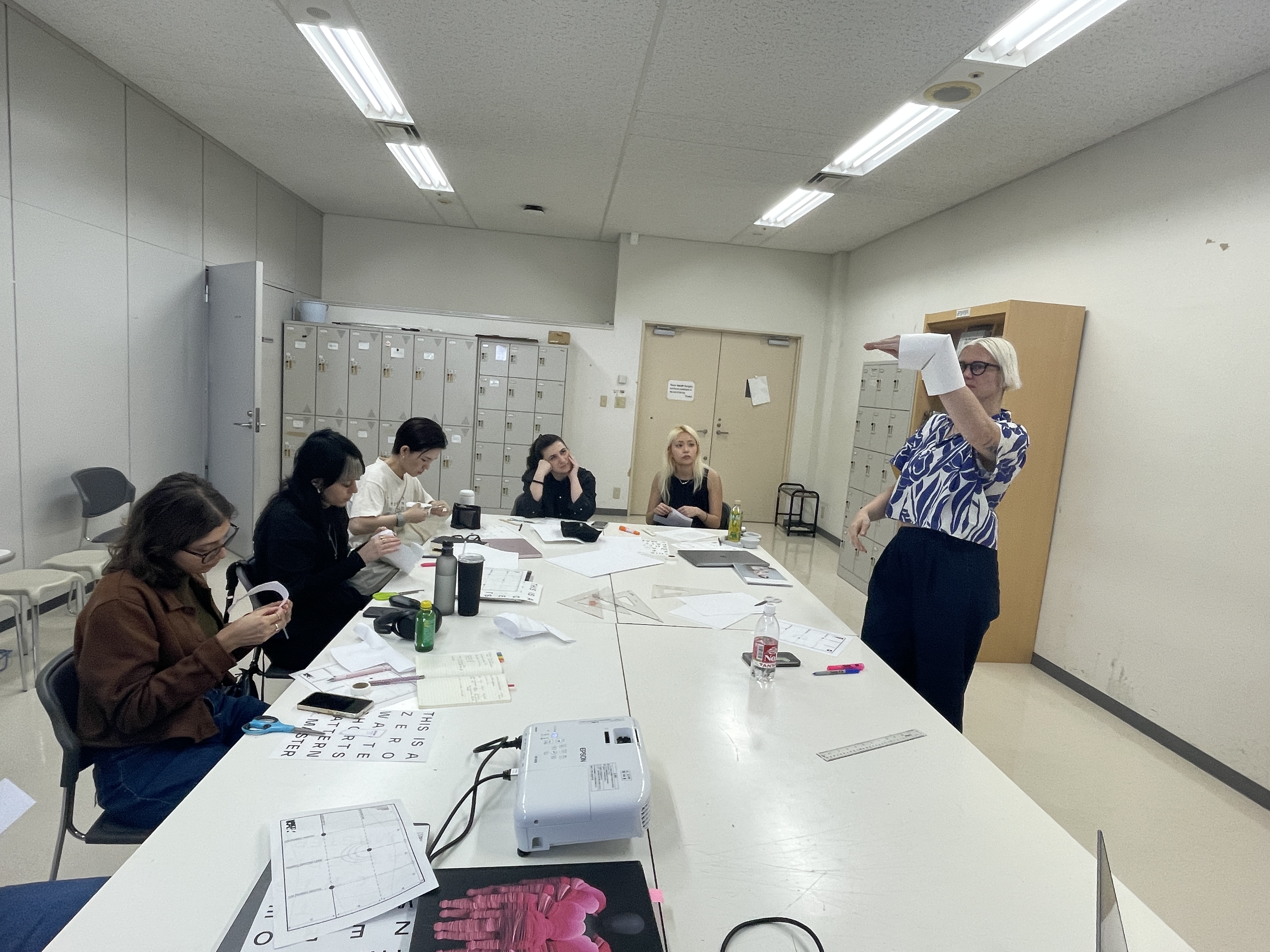
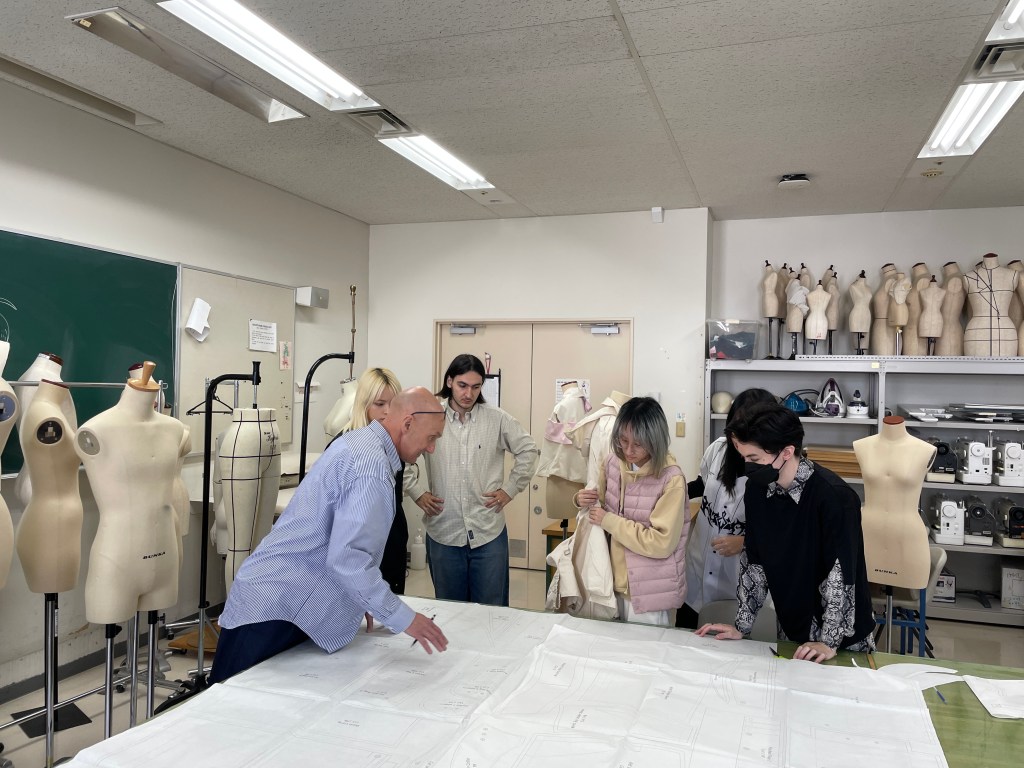
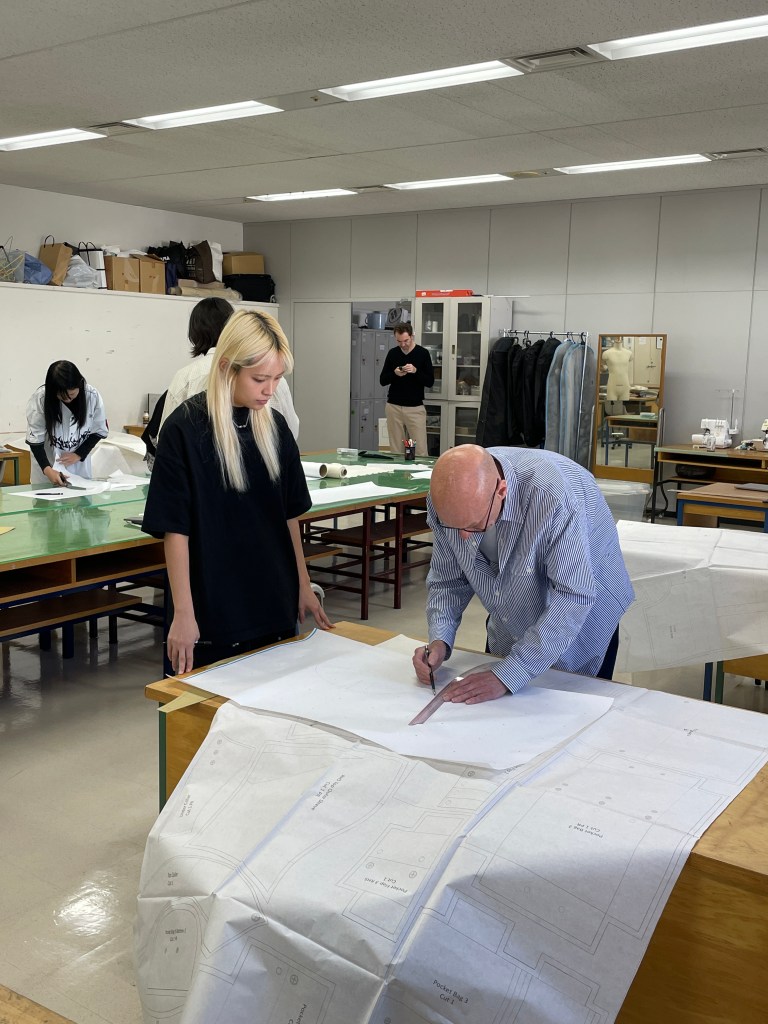
We had the pleasure of hosting Danielle Elsener at GFC. Danielle is a New York-based Zero Waste system designer, educator, and industry consultant who has spent a decade bridging academia and the fashion industry.
During her visit, she led an introductory Zero Waste workshop for our students, demonstrating how these systems function at an industrial scale. She challenged our students to view Zero Waste not just as a sustainable practice but as a primary design tool that pushes boundaries far beyond the traditional body sloper.
Danielle is the co-founder of Cut to Zero, an international collaborative consulting group formed alongside Cassandra Belanger. As two pioneering members of the Zero Waste Design revolution, they work closely with universities, industry partners, and NGOs to transform how clothes are made. Danielle is also a co-founder of the Zero Waste Design Collective.
We were honored to have Danielle share her expertise, providing our students with a firsthand look at innovative, systemic approaches to the future of fashion.
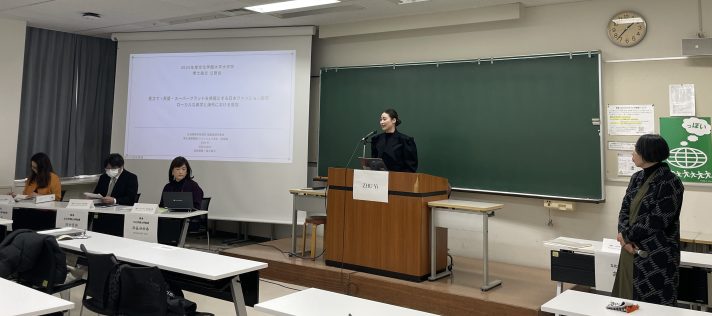
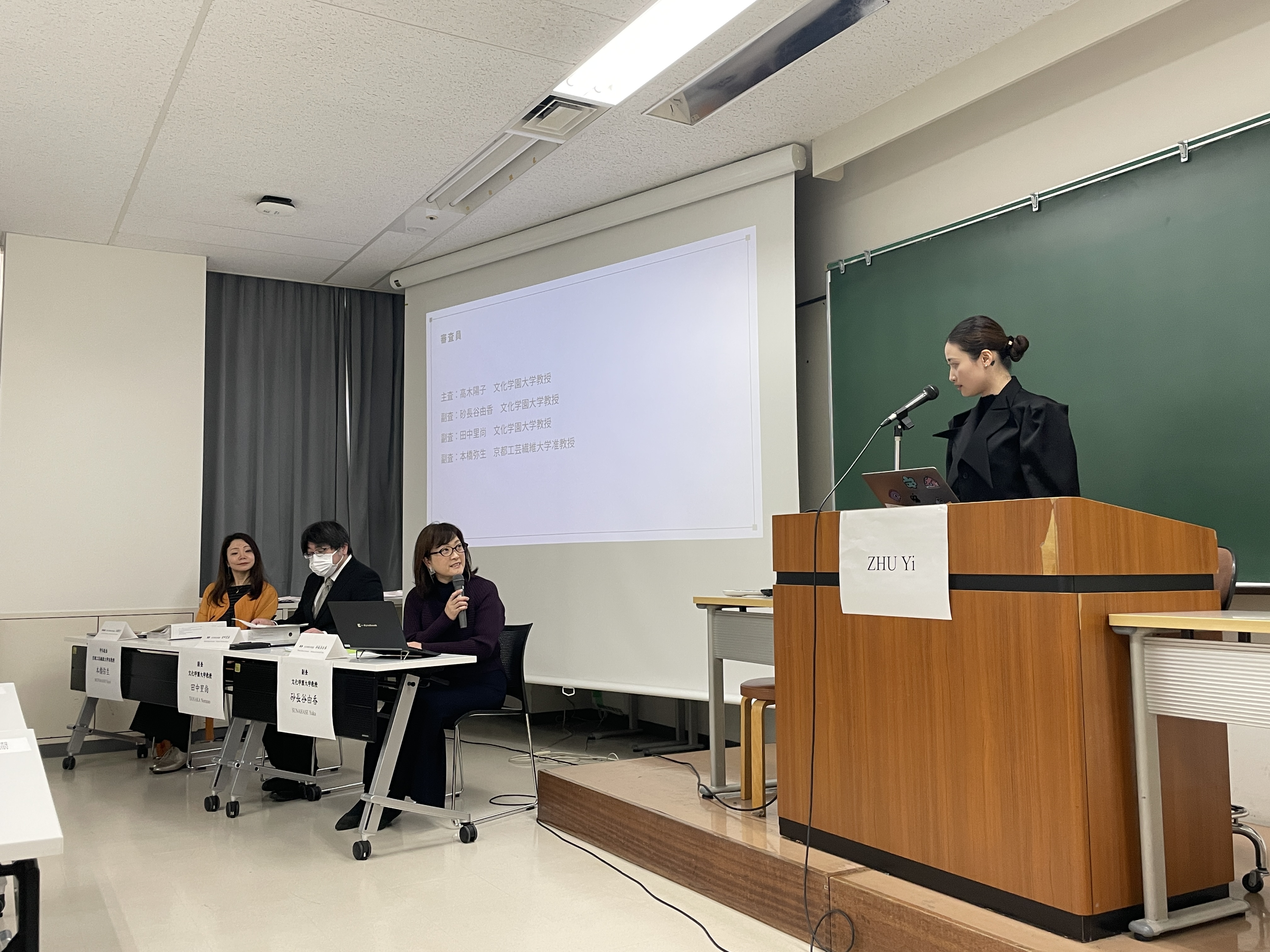
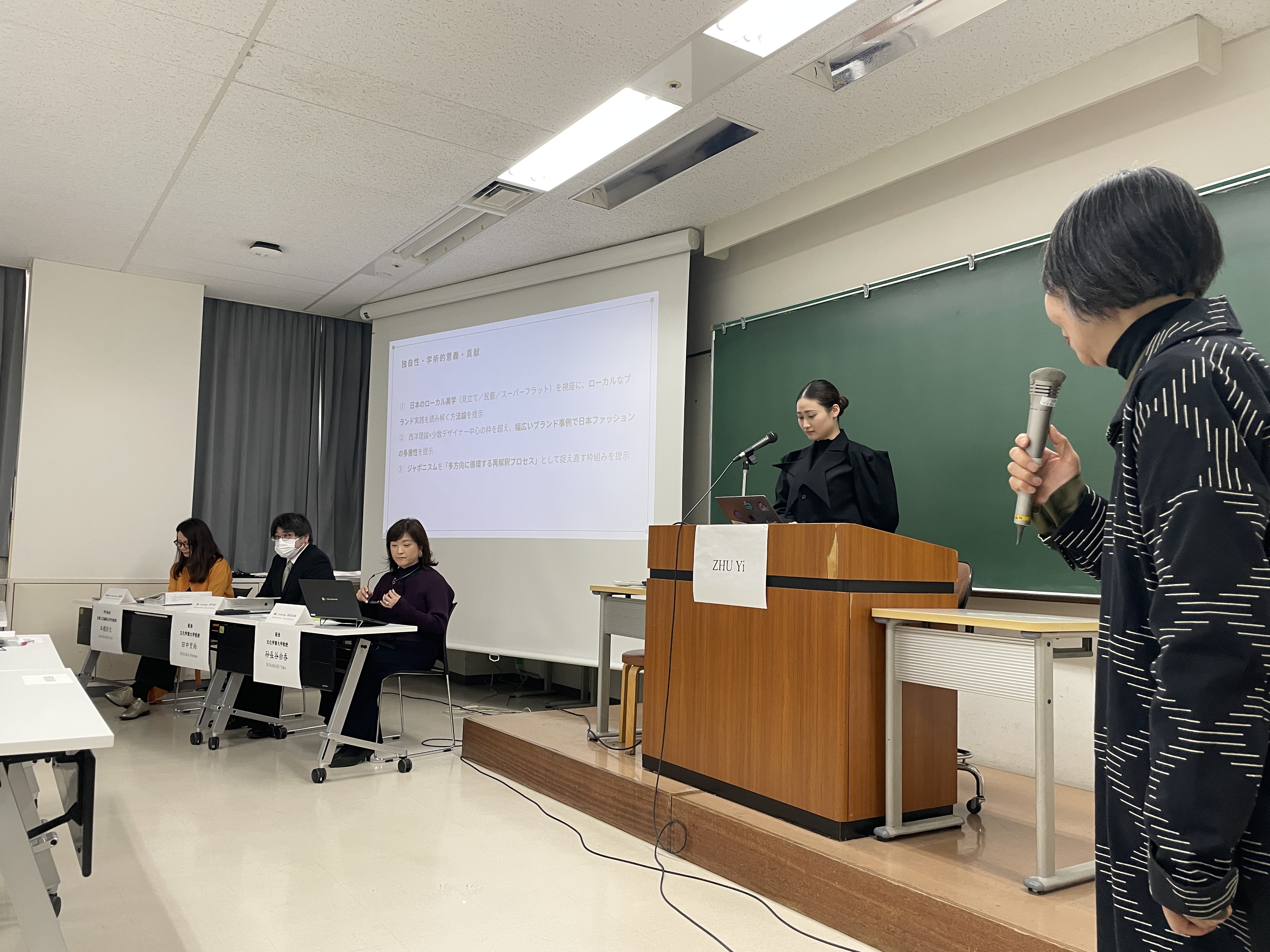
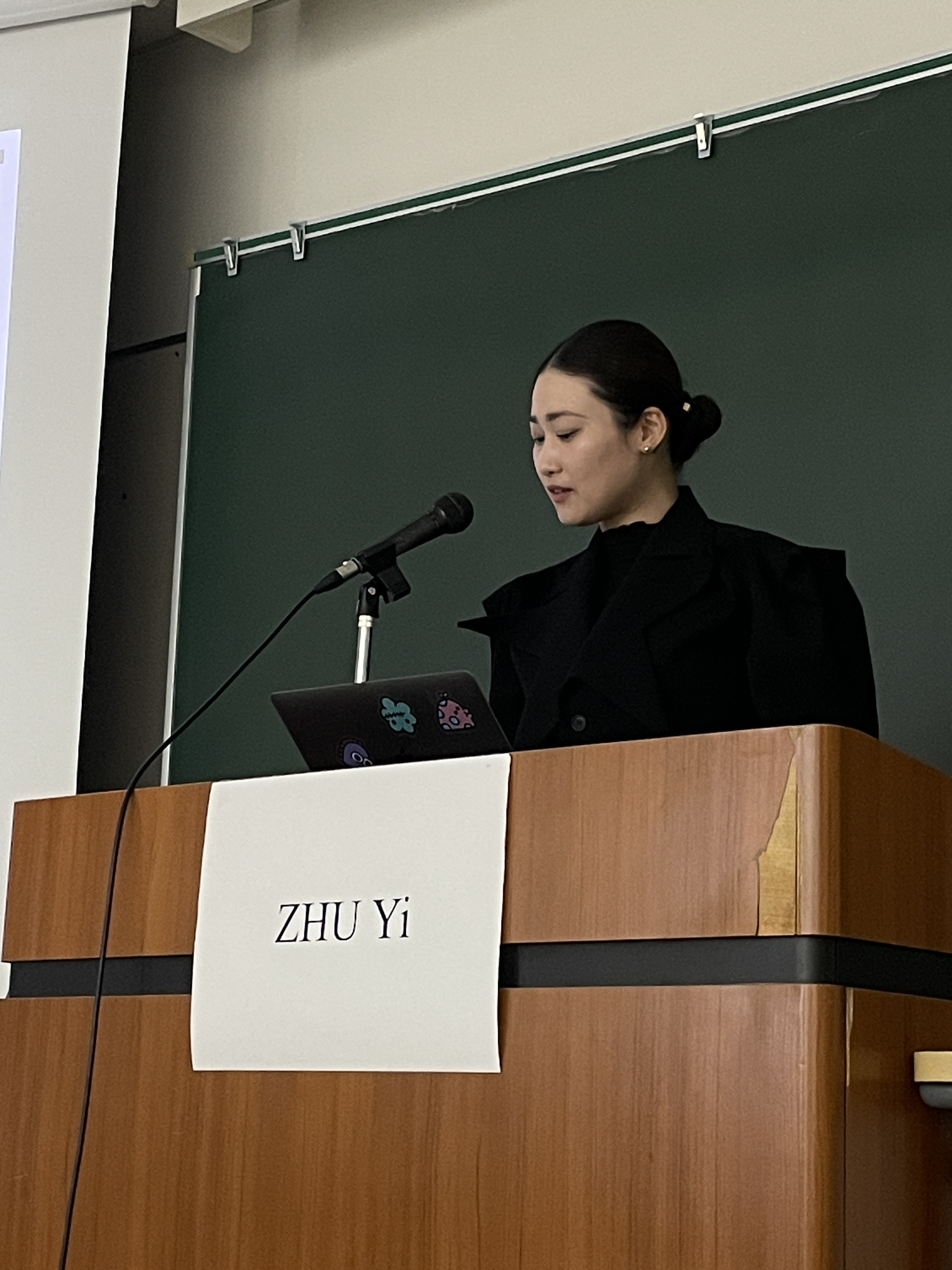
After graduating from GFC, Zhu Yi remained in Japan to further her research into the world of Japanese fashion. She pursued her PhD under the guidance of Professor Takagi Yoko, and just last week, she successfully completed her doctoral dissertation and public presentation. Her research offers a fascinating deep dive into theories in Japanese fashion.
Japanese fashion is often explained through Western theories and a small set of designers whose work fits familiar ideas such as “deconstruction,” “blackness,” or “Zen.” This presentation asks what gets overlooked when those categories become the default way to define “Japaneseness.” Since the 1990s, Japanese fashion has also developed through Ura-Harajuku street culture, globally circulating everyday apparel (exemplified by UNIQLO), and place-based practices rooted in regional materials and craft techniques. These trajectories are widely discussed in Japanese-language scholarship, yet they remain comparatively underrepresented or difficult to theorize in English-language fashion studies.
To address this gap, the research proposes three Japanese aesthetic concepts as analytical lenses: mitate, mingei, and superflat. Rather than treating them as fixed traditions or brand slogans, the presentation uses them as tools to examine how meaning and value are produced in fashion, and how styles and narratives circulate across media, institutions, and markets. Mitate clarifies design as reframing: garments generate meaning by citation, substitution, and re-contextualization, inviting viewers to “see one thing as another.” Mingei foregrounds everyday beauty and collective making, enabling analysis of value beyond luxury through use, repetition, anonymity, and affordability. Superflat, with its strong international afterlife, provides a framework for tracing how Japanese fashion travels through images, collaborations, and remixing across art, pop culture, and commerce.
The presentation combines a critical review of key institutional histories in fashion studies and exhibition culture with case studies that span avant-garde, designer, everyday, and streetwear contexts: ISSEY MIYAKE, YOHJI YAMAMOTO, COMME des GARÇONS, matohu, UNIQLO, 20471120, UNDERCOVER, and A BATHING APE®. Reading these diverse examples through mitate, mingei, and superflat highlights forms of creativity and cultural circulation that Western frameworks often sideline. It also reframes Japonisme not as a one- way influence from Japan to the West, but as a multidirectional, cyclical process of reception, re-editing, and re-circulation in today’s global fashion culture
In Japan, the end of the academic year is drawing closer, and our MA2 students have been working towards the completion of their theses and projects for the past months. As part of their project, our MA2 student, Abe Lee, organised a screening event for the documentary that they developed discussing the theme of non-binary fashion expression in Japan titled “Fashioning Ambiguity: Japanese Nonbinary Style.” The event was held at Black Bird Eatery, a queer-friendly space in Sasazuka, and was filled with a large crowd for the occasion.
In their documentary, Abe discusses the results of the research they have conducted over the past two years. The documentary explores the experiences and style of nonbinary and x-gender people in Japan, through interviews with various participants including the co-founder of non-binary magazine IWAKAN, Andromeda, and some leading scholars in the field.
Abe made the documentary publicly available, and it can be viewed on their homepage.
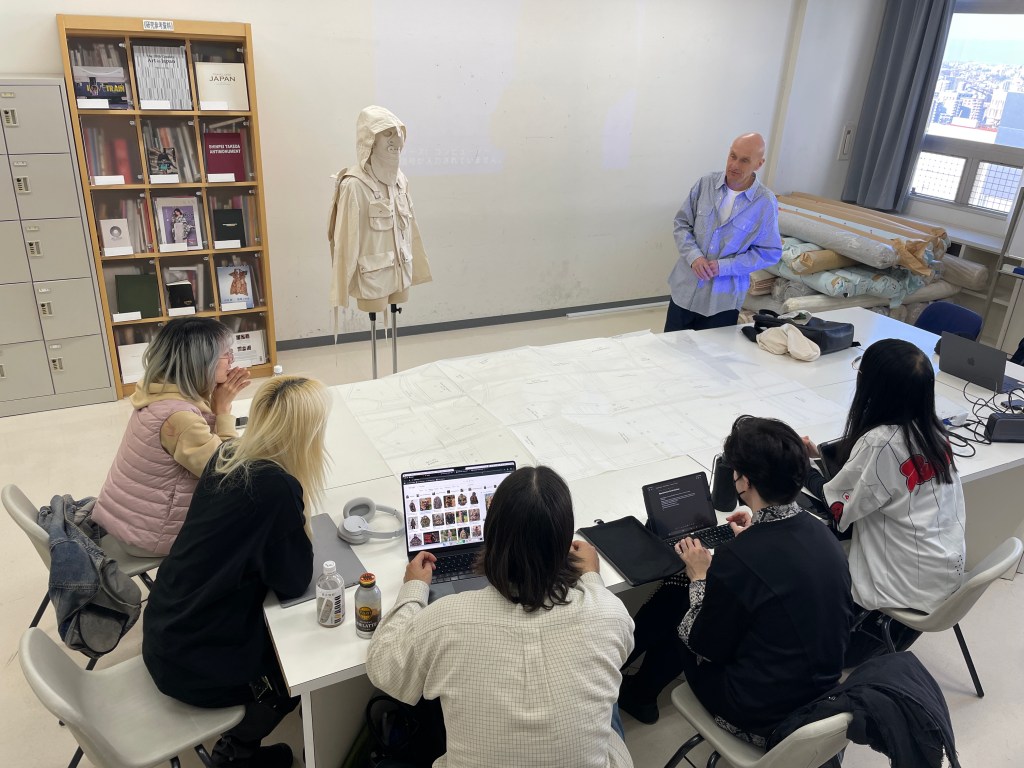
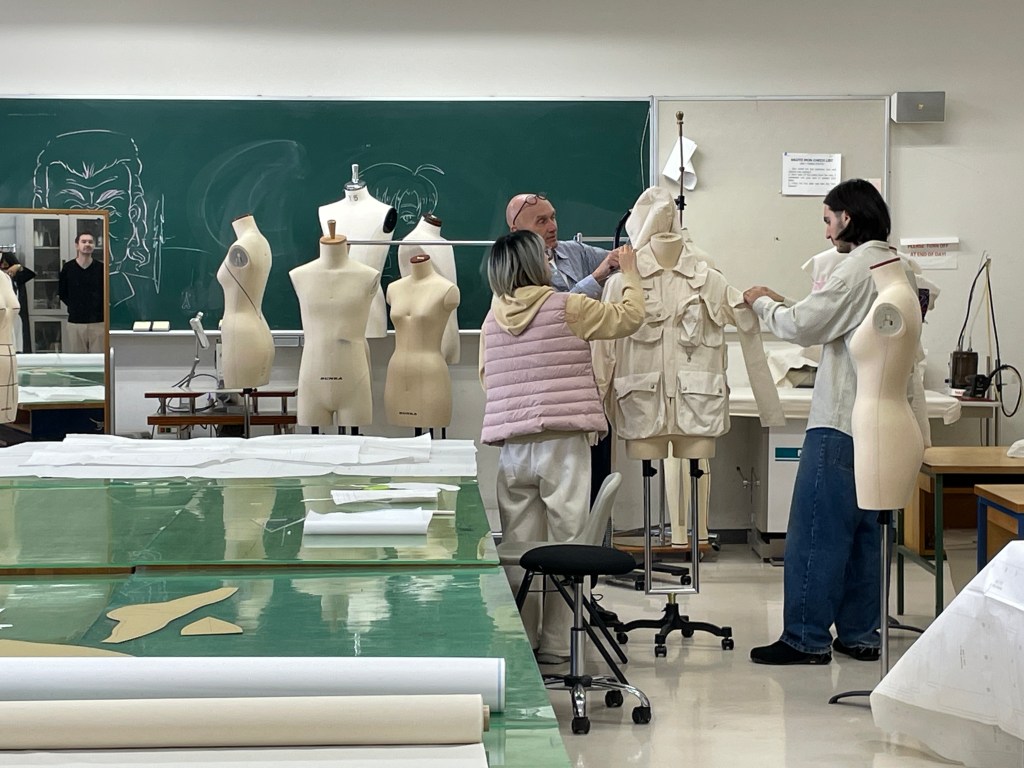
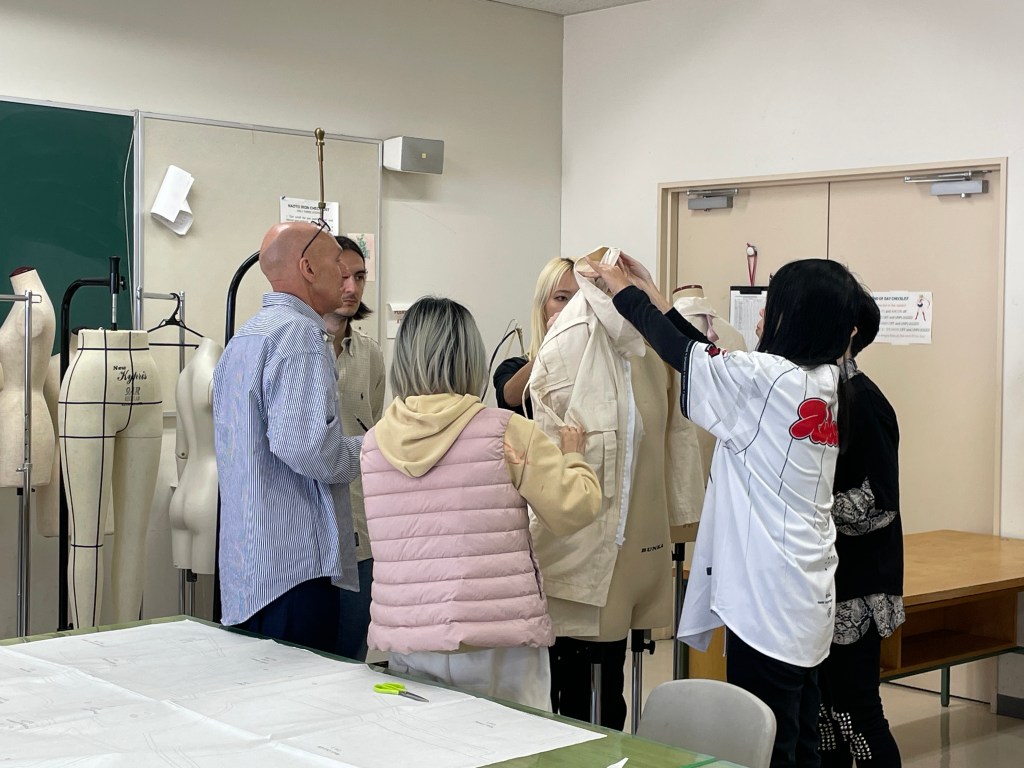
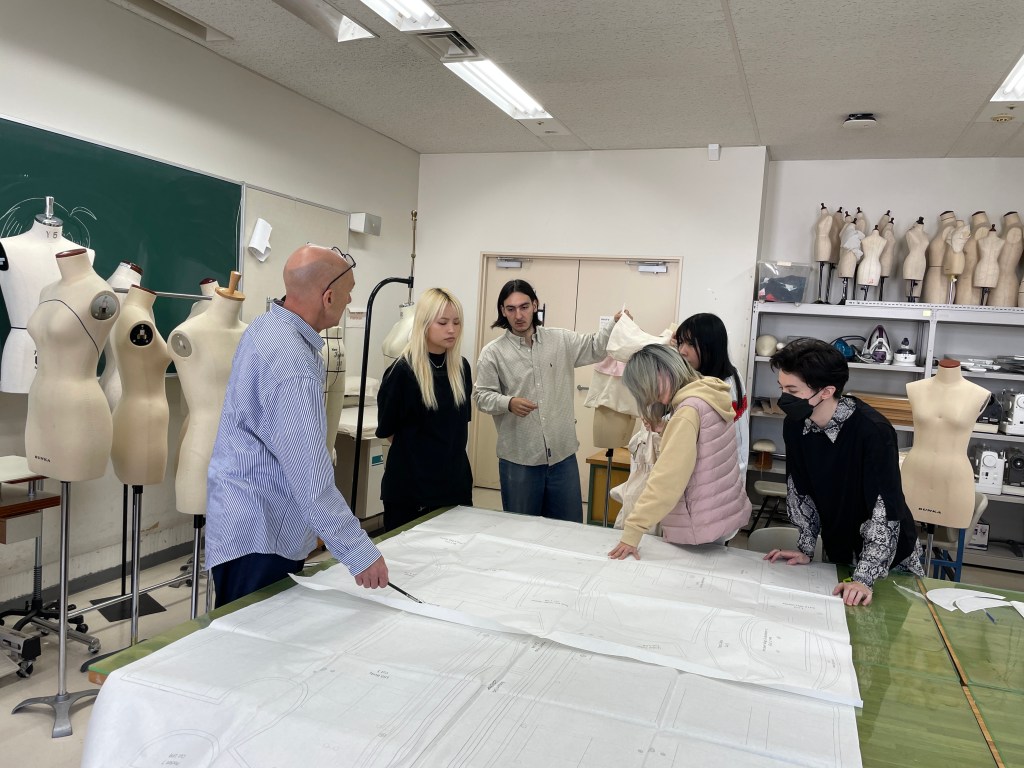
We had the pleasure of welcoming Professor Gareth Kershaw from RMIT University, who delivered a special lecture and hands-on workshop for GFC students on object-based research into occupational and functional garments, using men’s technical archetypes as a pedagogical tool.
In his talk, Professor Kershaw emphasized the growing importance of revisiting and reinterpreting occupational clothing in contemporary design—both to enhance functionality and to elevate aesthetic value.
Drawing on examples ranging from Andrew Bolton’s concept of “Supermodern” clothing to the innovative work of Massimo Osti of C.P. Company, he explained how exploring diverse design methodologies and historical approaches can broaden our perspectives as fashion designers.
During the workshop, students engaged in archive-based research—an approach Professor Kershaw has developed extensively over the years—and worked directly with the pattern of the Swiss Army M70 Alpenflage Jacket, gaining insight into the construction and logic behind technical garments.
GFC shares a double degree program with EnsAD (L’École nationale supérieure des Arts Décoratifs), one of France’s top design universities.
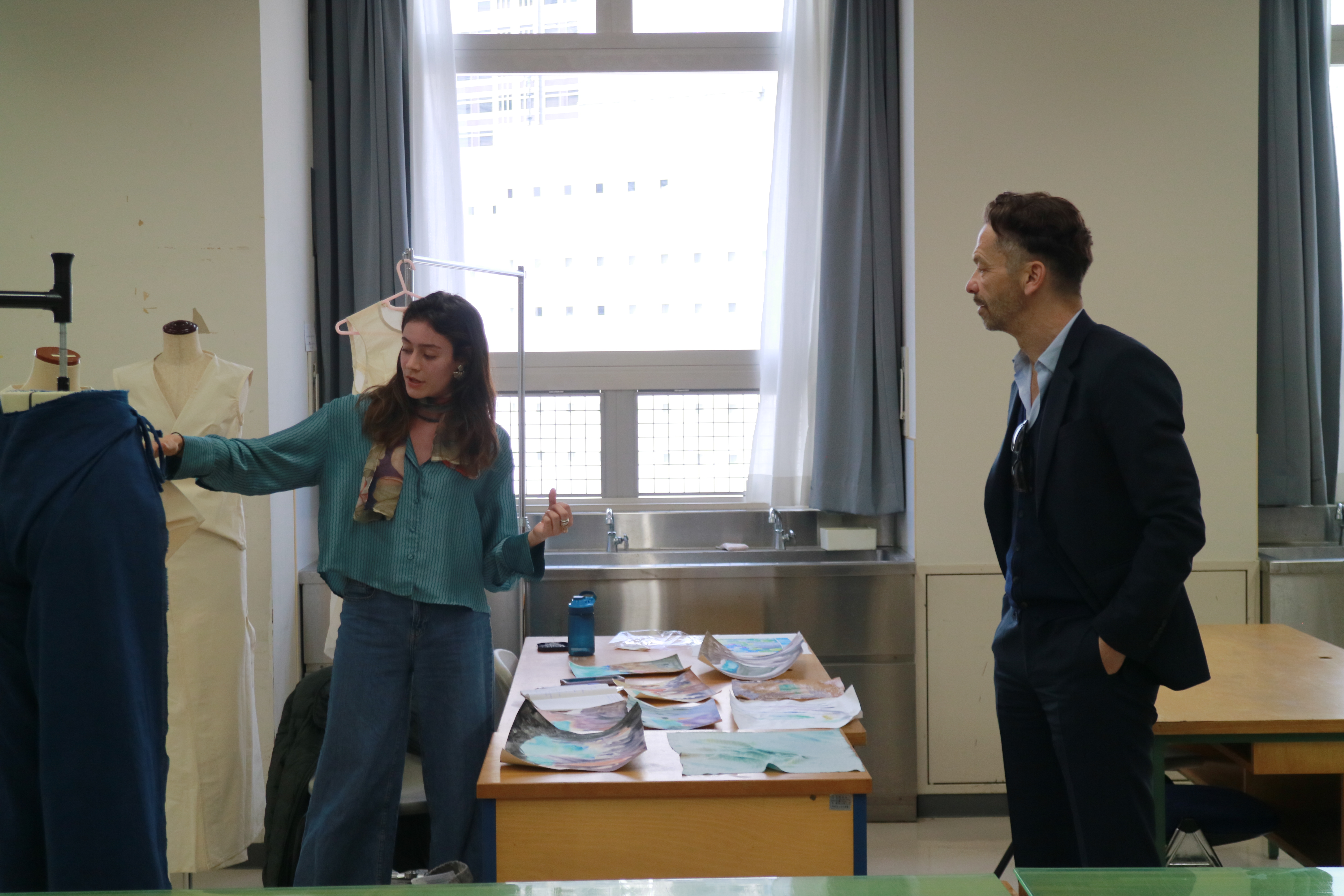
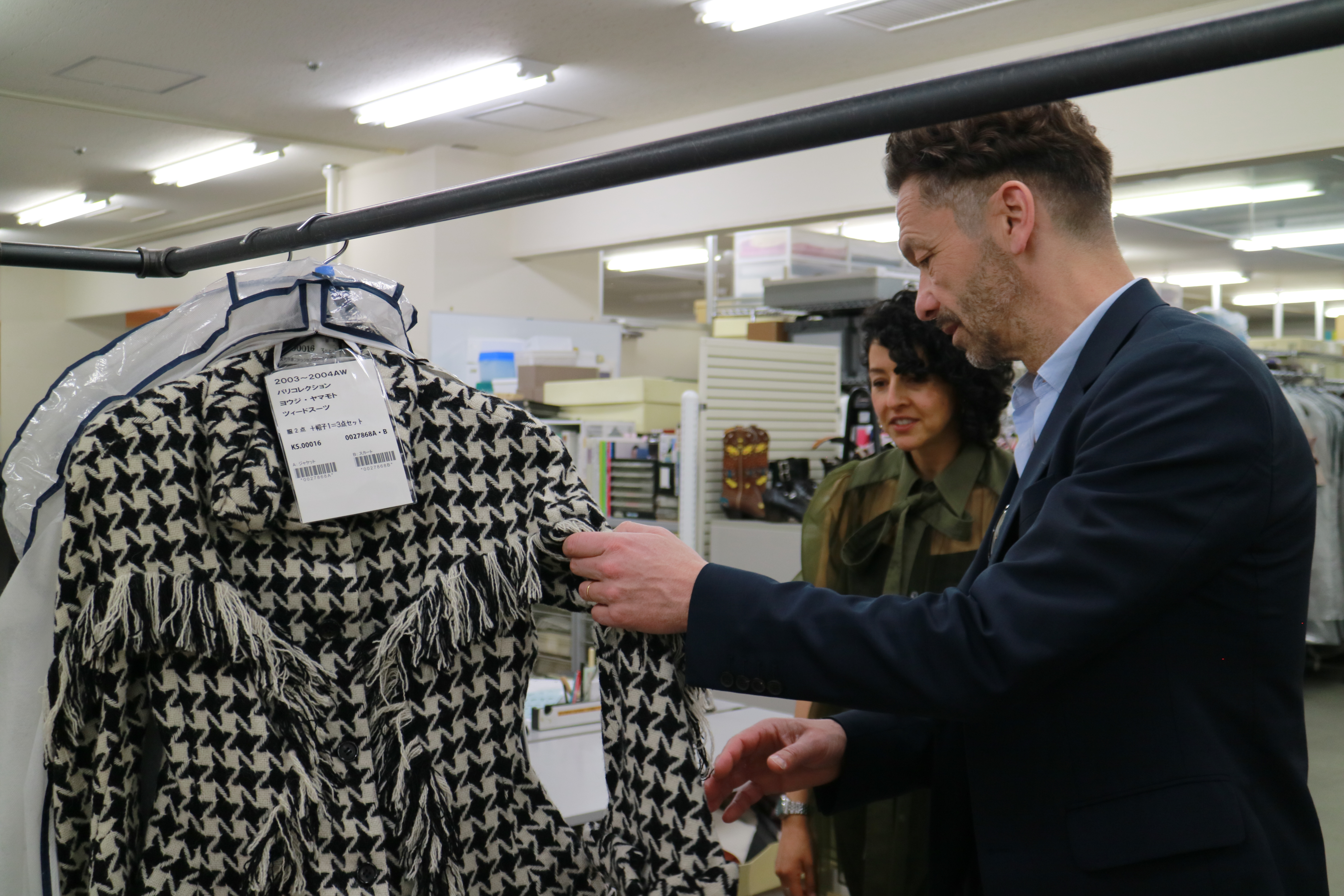
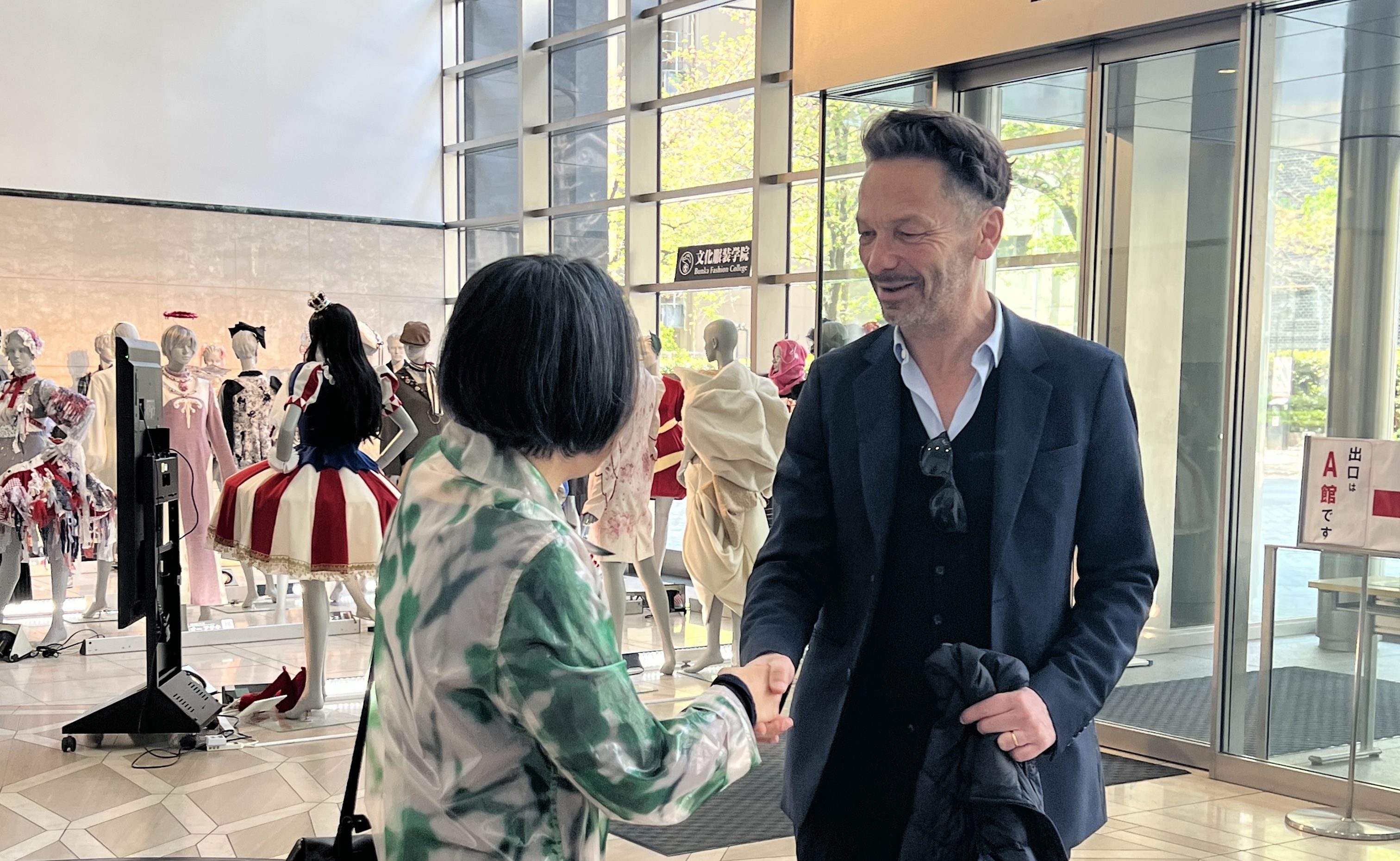
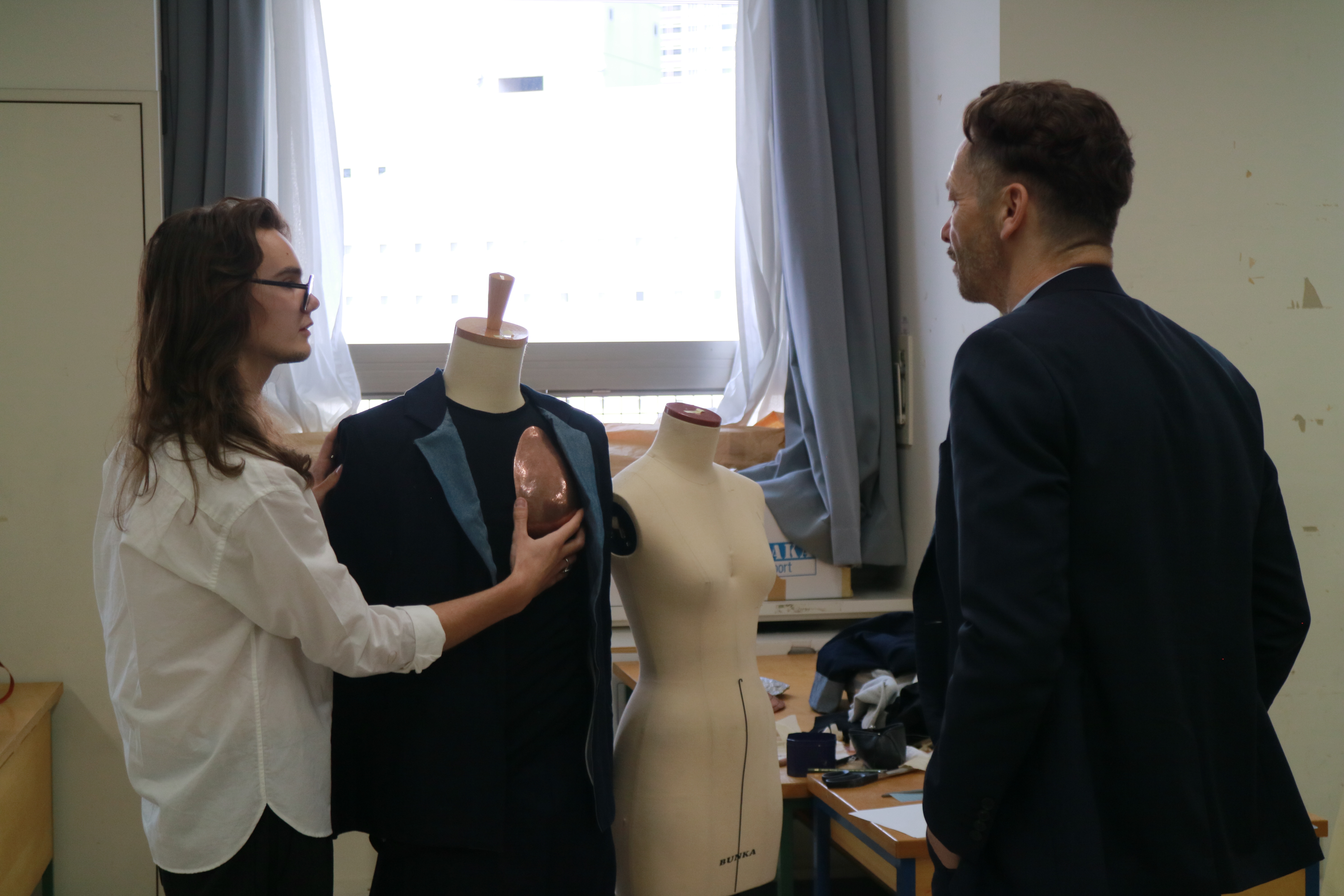
On April 17th, 2025, EnsAD Rector Emmanuel Tibloux visited Bunka Gakuen University. During his visit, he engaged in a lively discussion with students from the double degree program, speaking with them as they presented their works in progress. He also toured several key facilities that represent the university’s strengths, including the Textiles, Clothing and Video Resource Centre, the university library, and the renowned Clothing Museum—cornerstones of Bunka Gakuen’s proud heritage in fashion and design education.