

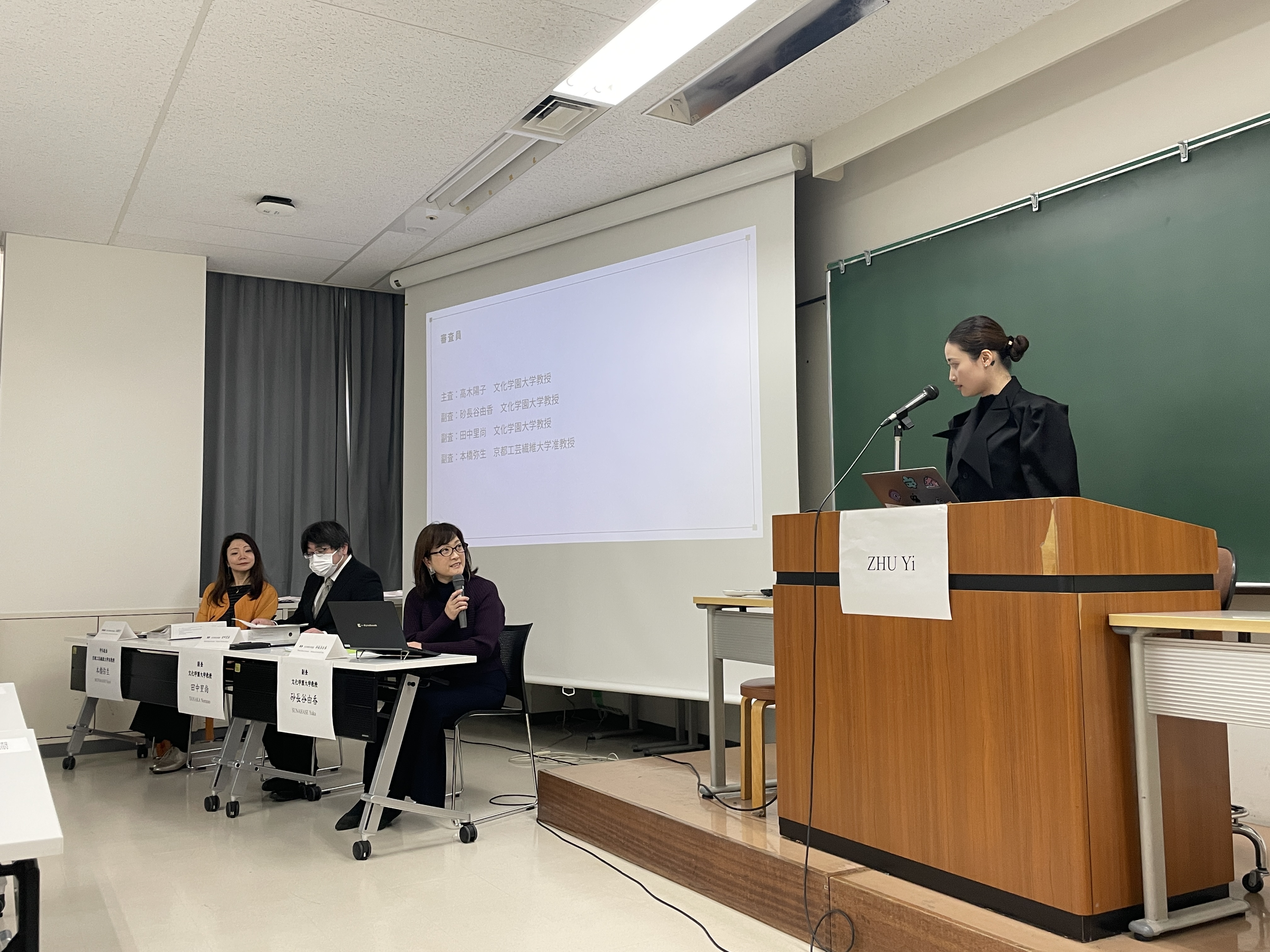
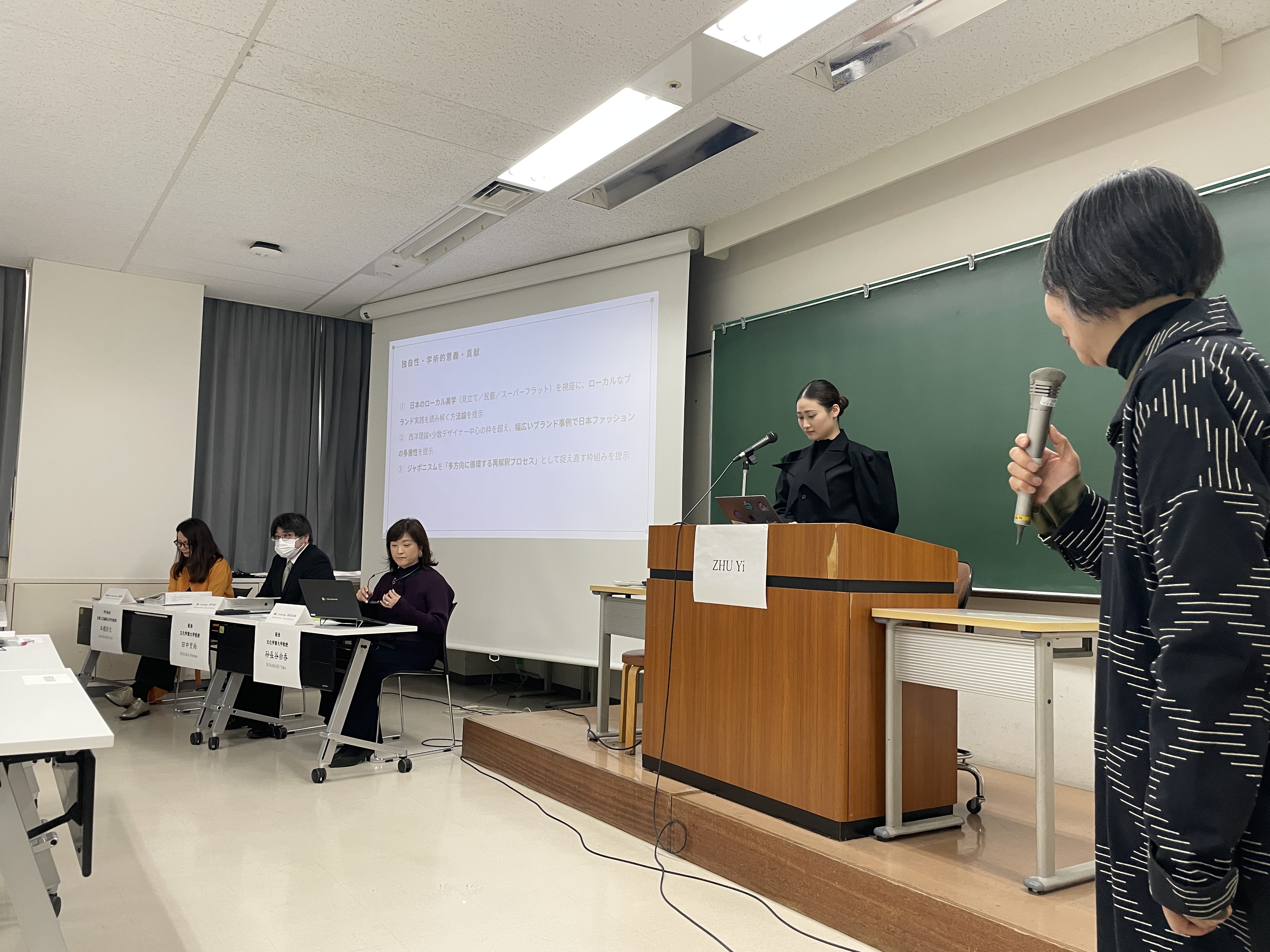
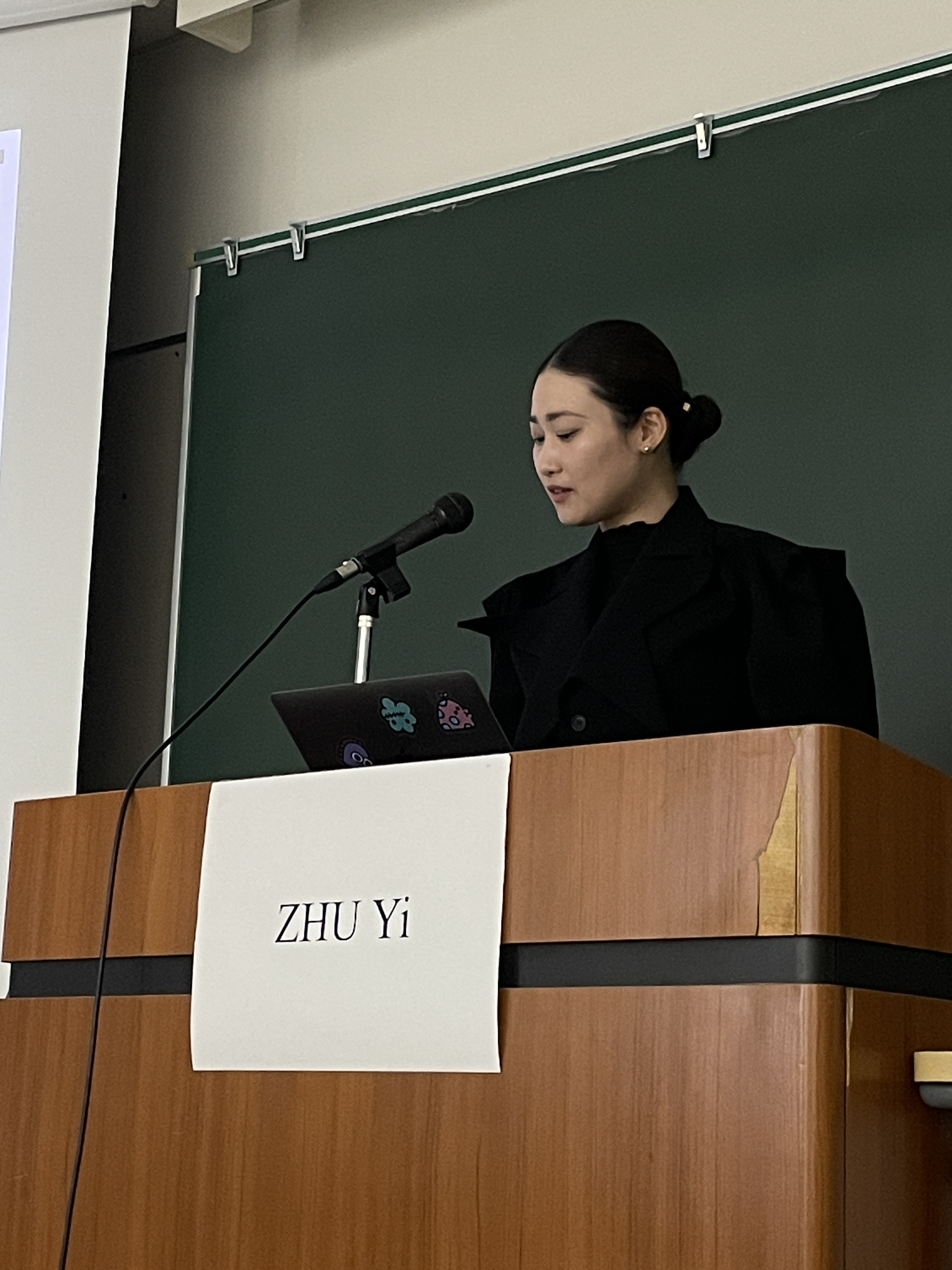
After graduating from GFC, Zhu Yi remained in Japan to further her research into the world of Japanese fashion. She pursued her PhD under the guidance of Professor Takagi Yoko, and just last week, she successfully completed her doctoral dissertation and public presentation. Her research offers a fascinating deep dive into theories in Japanese fashion.
Japanese fashion is often explained through Western theories and a small set of designers whose work fits familiar ideas such as “deconstruction,” “blackness,” or “Zen.” This presentation asks what gets overlooked when those categories become the default way to define “Japaneseness.” Since the 1990s, Japanese fashion has also developed through Ura-Harajuku street culture, globally circulating everyday apparel (exemplified by UNIQLO), and place-based practices rooted in regional materials and craft techniques. These trajectories are widely discussed in Japanese-language scholarship, yet they remain comparatively underrepresented or difficult to theorize in English-language fashion studies.
To address this gap, the research proposes three Japanese aesthetic concepts as analytical lenses: mitate, mingei, and superflat. Rather than treating them as fixed traditions or brand slogans, the presentation uses them as tools to examine how meaning and value are produced in fashion, and how styles and narratives circulate across media, institutions, and markets.
Mitate clarifies design as reframing: garments generate meaning by citation, substitution, and re-contextualization, inviting viewers to “see one thing as another.” Mingei foregrounds everyday beauty and collective making, enabling analysis of value beyond luxury through use, repetition, anonymity, and affordability. Superflat, with its strong international afterlife, provides a framework for tracing how Japanese fashion travels through images, collaborations, and remixing across art, pop culture, and commerce.
The presentation combines a critical review of key institutional histories in fashion studies and exhibition culture with case studies that span avant-garde, designer, everyday, and streetwear contexts: ISSEY MIYAKE, YOHJI YAMAMOTO, COMME des GARÇONS, matohu, UNIQLO, 20471120, UNDERCOVER, and A BATHING APE®. Reading these diverse examples through mitate, mingei, and superflat highlights forms of creativity and cultural circulation that Western frameworks often sideline. It also reframes Japonisme not as a one- way influence from Japan to the West, but as a multidirectional, cyclical process of reception, re-editing, and re-circulation in today’s global fashion culture


 bunkaglobalfashion.com