The Global Fashion Concentration (GFC) has been founded for students who wish to gain their MA in fashion and textile studies in English. It strives to bridge theory and practice within a global context with a focus on fashion related art and design. As the course is based in Japan, there are classes offered on Japanese aesthetics and language. An array of trans-disciplinary subjects related to fashion are offered. The core subject of the GFC, titled "Project Research", is led by specialists and industry counterparts and is designed to allow students to develop their individual research proposals both in practice and theory. Students will have access to Bunka’s celebrated fashion library and world-class fashion museum for research and inspiration. Additionally, internships at high profile Japanese brands such as Anrealage, as well as the National Art Center enable students to implement real world connections between concept and practical knowledge. To be eligible to graduate, students are required to complete either a full Master’s thesis, or a collection.
In 2016, GFC launched a double degree program with the prestigious Parisian design school École nationale supérieure des Arts Décoratifs (ENSAD). Students enrolled in this program will have the opportunity to present their MA project at the ENSAD final collection show and exhibition in Paris.
GFC is a concentrated program: Excellence in creation and skill as well as strong motivation, commitment and patience will be required. Successful graduates will be candidates for employment in all areas and levels of the fashion industry across the world, including design, journalism, fashion buying, curation, and academia.
On November 24, 2023 we were joined by Sarmily Sarker from BGMEA University of Fashion & Technology, who visited Japan and Tokyo for research. As part of her research schedule, ms. Sarker organized a workshop featuring “Nakshi Kantha,” a traditional embroidery technique of the Bengal region in Bangladesh and India. During the workshop, our GFC students had the opportunity to learn more about the history of the technique, and got to experiment with it firsthand through making some small samples. The three-hour workshop provided the students a space to share thoughts and experiences while embroidering, and we thank ms. Sarker for sharing this wonderful technique with us.
On November 20th, 2023, we organised a special lecture from Diana Gardeneira, an Ecuadorian-Costa Rican, visual artist and designer. She talked about her latest work “NMTKS” (No me toques in Spanish, Don’t touch me in English), which addresses issues of visibility of violence against women, protection, lack of representation, sisterhood, stories and collectivity. Using fashion’s political means of expression, Diana shared with GFC students her ideas of being a woman and how she confronts patriarchal structures through a series of clothing pieces.
Diana is part of the collective 闘う糸の会/Hilos que Luchan, Manos que Sanan (Fighting threads, healing hands in English), which promotes women’s empowerment and international exchange through collaboration between artists and citizens in Latin America and Japan.
GFC second-year student Brittany Glassey’s 3D recreation video was featured in the Bunka Gakuen Costume Museum “Adoption of Western Clothing in Japan and the History of Bunka Gakuen ” exhibition. For her thesis and project research, Brittany has worked extensively around the topic of how digital technologies can help in the study and understanding of historic dress.
For the exhibition, Brittany has collaborated with the museum to develop a detailed 3D recreation of the Meiji Empress taireifuku. Using this as a base, Brittany created an explanatory video, as well as a bilingual online platform that visitors can access during the exhibition period, providing insights into the construction, embroidery and embellishments, linked to the socio-historical background of the garment. Making use of virtual recreation’s possibilities, her work also provides insights into how the garment could have looked like when worn by the Empress at the time.
The project was a valuable experience for both Brittany and the museum, and we look forward to seeing Brittany’s future virtual recreation projects.
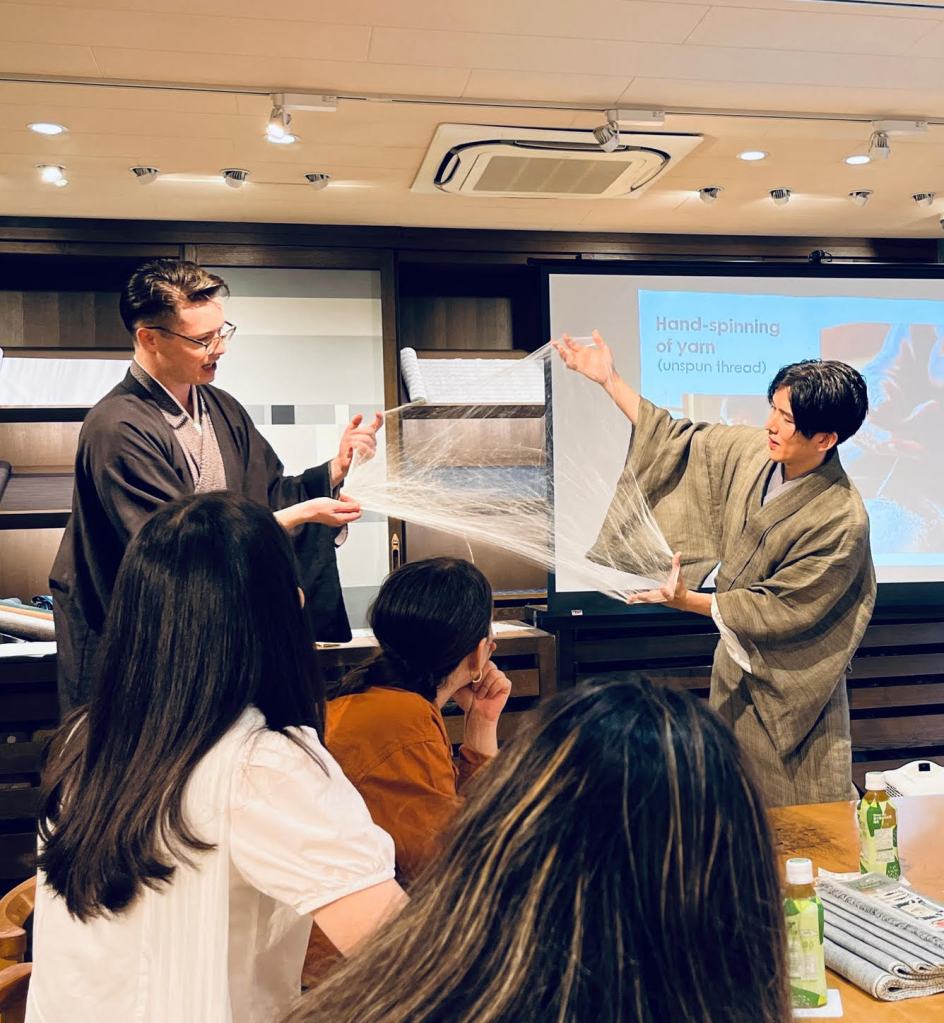
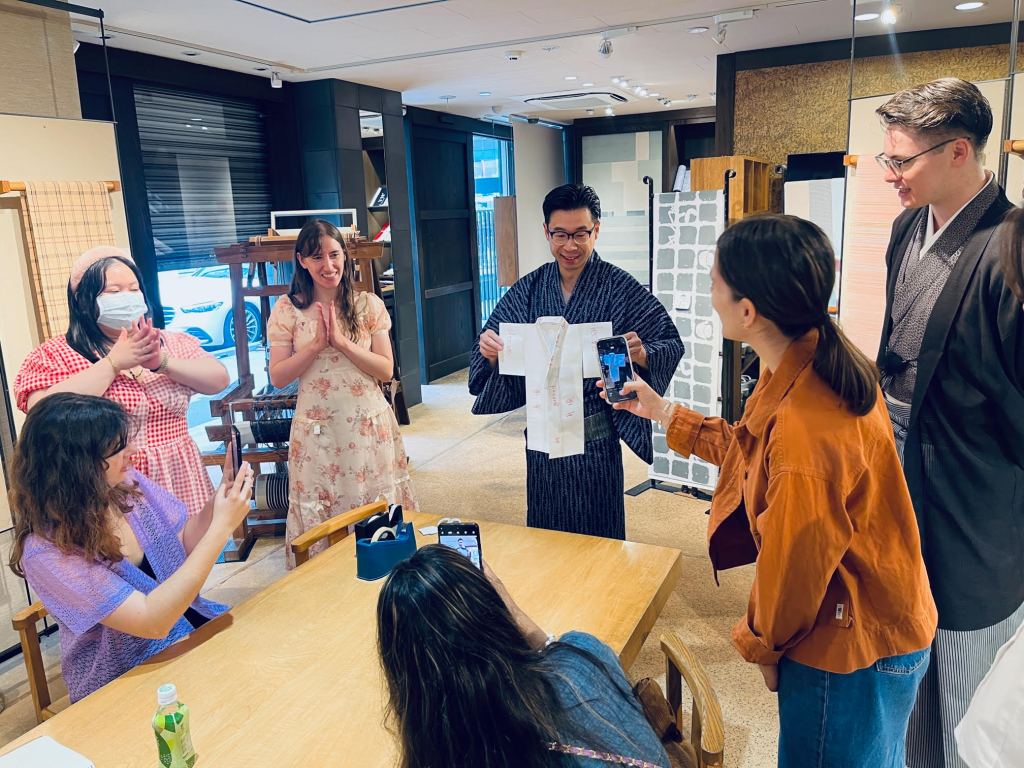
On June 28th, within the framework of the class Japanese Art and Design, we visited Ginza Motoji, a kimono retailer, working closely with textile artisans. At Motoji, the students had the opportunity to not only learn about how kimono and their textiles are made, but they also had the chance to see and touch many different types of textiles up close.
Ginza Motoji has been active in working as a bridge connecting artisans and customers, through conveying stories of making processes, introducing the people behind the textiles, and the work and effort that goes into creating these textiles. In doing so, they invite many artisans to talk about their work at the store, and they have taken up different collaborations with artisans to develop a new and more contemporary image of kimono and kimono textiles.
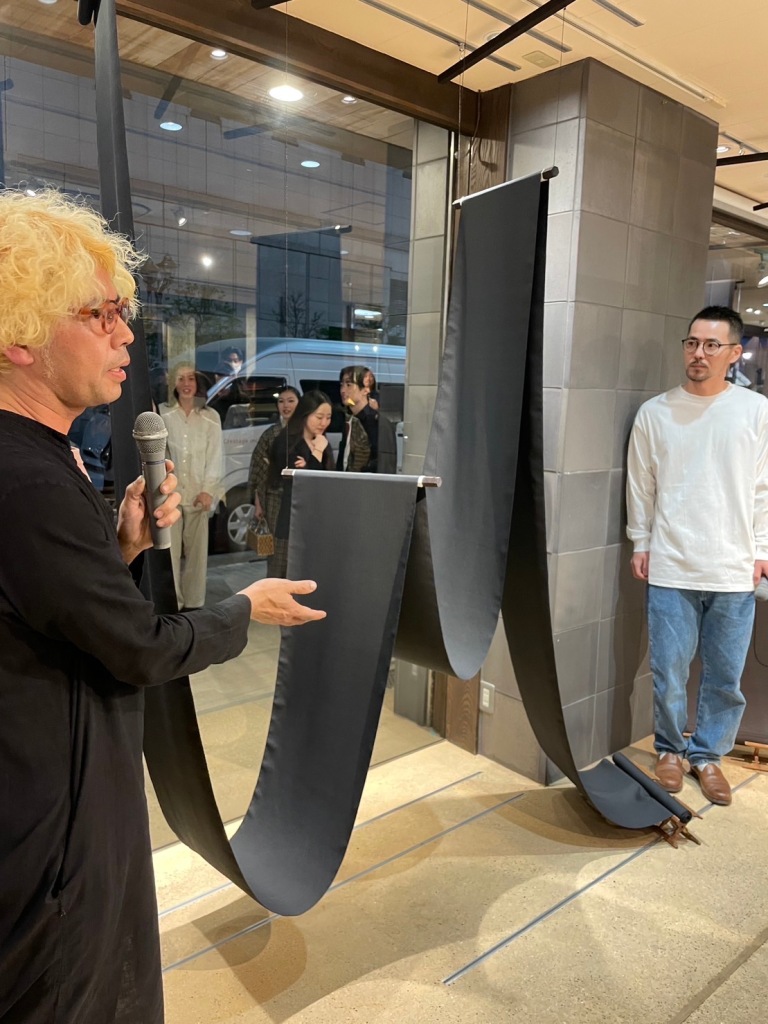
One of the latest projects that Ginza Motoji has taken up was a collaboration between an Amami Oshima dyer and a weaver, making use of different types of base colours, to develop different hues of black and create new expressions of dorozome and Amami Oshima weaves. They presented the collaboration through an exhibition of which you can find more information here. GFC had the chance to visit the opening night of the exhibition in Tokyo, which brought together many textile designers and kimono lovers. We are excited to see what future endeavors Ginza Motoji will undertake!
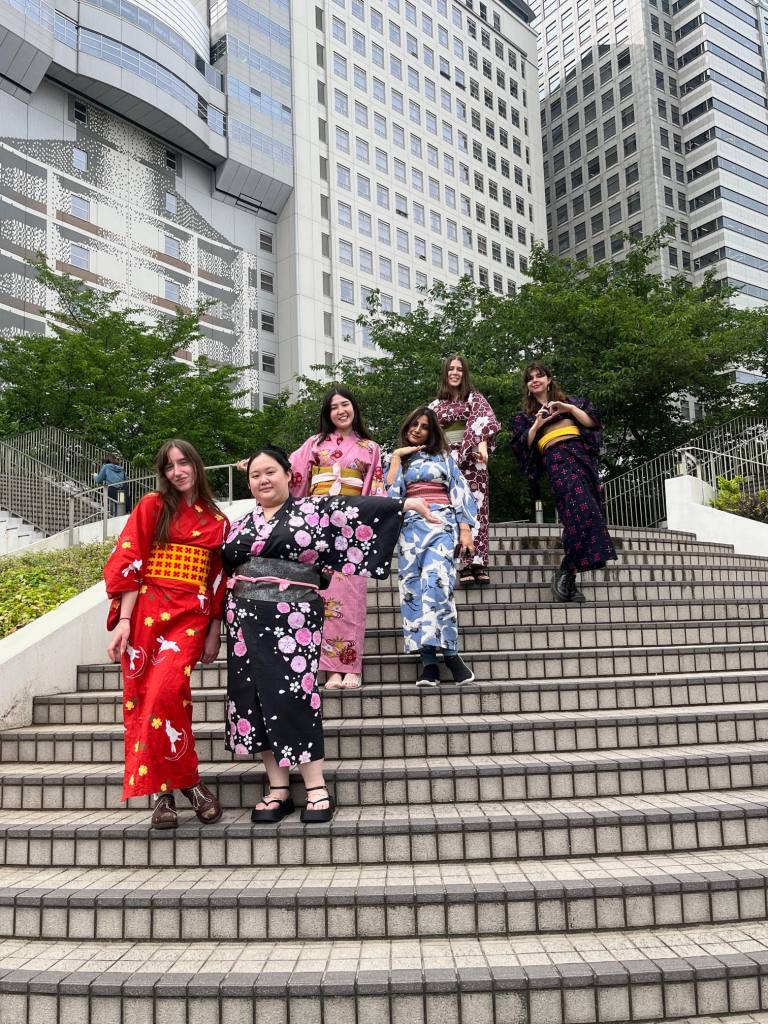
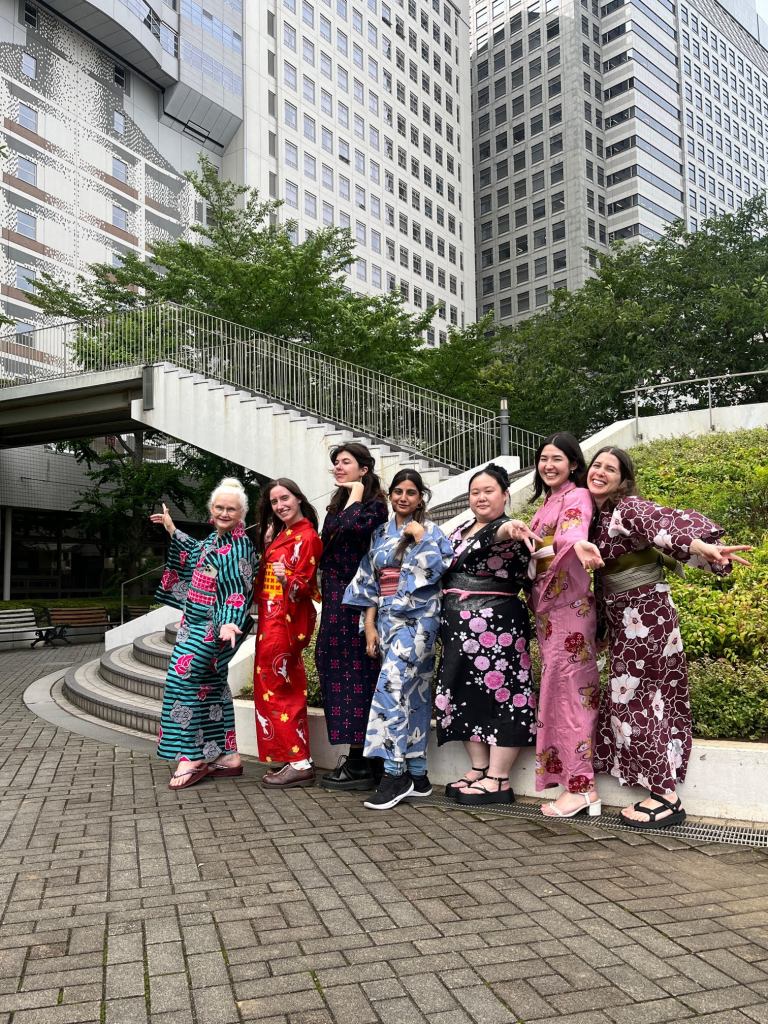
Every year, we invite kimono researcher Sheila Cliffe to talk about the history of kimono fashion, followed by a workshop in yukata wearing. This year too, our students had the opportunity to learn how to dress themselves, and the results can be seen in the pictures. We hope that our workshop encouraged our students to wear some yukata during summer festivals in and around Tokyo this year!








 bunkaglobalfashion.com